
What is my injury?
You have broken (fractured) the top part of your upper arm bone. This is called a proximal humerus fracture.
Although this injury can be very painful, most fractures heal without an operation. Because of this, you do not routinely need a follow-up appointment with the orthopaedic team or another X-ray in the Fracture Clinic.
If you have any questions about your injury or recovery, please contact the Frailty Trauma ACP on 07511 166031.
Why is this leaflet for older people?
Older people can find recovery from this injury particularly challenging. This leaflet provides additional information to support a safe and successful recovery.
Family members and carers can also use this leaflet to support someone who is unable to follow the advice independently.
If you are able to attend appointments and follow an exercise programme, speak to a healthcare professional about a referral to outpatient physiotherapy.
You can also access this information by scanning this QR code
What to expect in your recovery
The pain begins to settle 3 to 4 weeks after the injury. The pain may feel worse before it feels better.
In the first 2 weeks swelling and bruising will travel down your arm and may affect your hand. It can help to know that this is normal.
The bones take 8 to 12 weeks to heal and by three months most pain should have gone.
It may take 6 to 12 months for you to get maximal use back in your arm – aim for as much movement as possible but it may not be the same as you had before your injury.
The exercises and advice that follow will help get your arm moving and give you the best chance of recovery.
When to seek urgent medical advice
Seek urgent medical advice if, at any time after your injury, you develop:
- a new loss of movement in your hand or wrist, or
- a new loss of feeling or numbness in your hand or wrist.
Looking after yourself at home
Remove any rings or jewellery as soon as possible and keep them off until all swelling has settled.
You will need extra help while your arm heals. If you need more support than expected when you get home, contact the Single Point of Access: 0300 125 6789.
Take pain relief as advised by your doctor. If your injury makes it difficult to manage your medication, tell someone as soon as possible.
Constipation can occur due to pain medication and reduced activity. Drink plenty of fluids and use laxatives if needed. Seek advice from a healthcare professional if constipation continues.
Wear loose-fitting clothing. Dress your injured arm first and remove it last to minimise pain and movement.
A simple looped sling has been provided for comfort. Remove it daily to complete the exercises described later in this leaflet.
Finger foods, such as sandwiches, can be easier to manage while your arm is healing. Simple aids, such as a plate guard or wide-handled cutlery, may make eating easier. Ask a healthcare professional if you need advice.
Using your arm
Your arm will be painful, and this will limit what you can manage, especially in the first 2 to 3 weeks. This may affect everyday activities such as going to the toilet, getting out of bed, and using walking aids.
You may need support from a physiotherapist or occupational therapist to find alternatives ways of staying safely mobile.
Once you feel ready, you can begin to put weight through your arm letting comfort guide how much you do.
Preventing chest infections
- Breathe in slowly through your nose; imagine the base of your lungs expanding fully.
- Slowly exhale through your mouth.
- Do this 2 to 3 times in a row.
- Try to do this every half hour. You could set a timer, ask a family member or carer to remind you, or if you are watching television use program breaks as a prompt.
Positioning
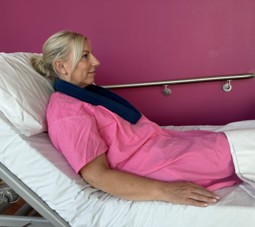
Try not to lean on your broken arm. Avoid putting pillows or support under your elbow as this will push on the broken bone and make the pain worse.
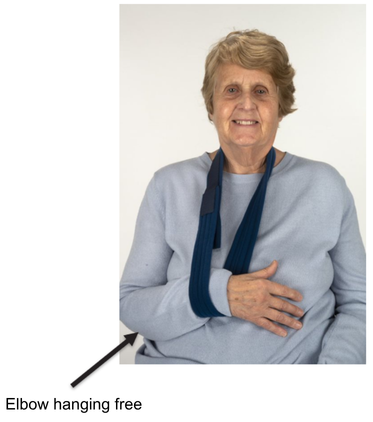
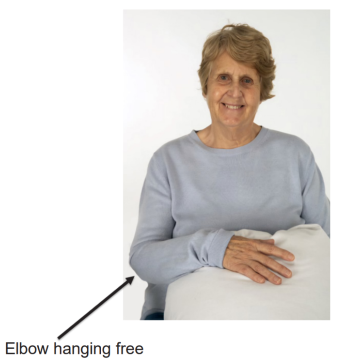
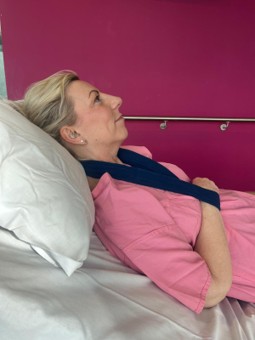
Sleep upright, if possible, to reduce strain on your arm. If you notice you are leaning on your broken arm in bed try to reposition yourself or ask for help if available.
Exercises: 0 to 2 weeks
Do these exercises at least twice a day – more often if possible.
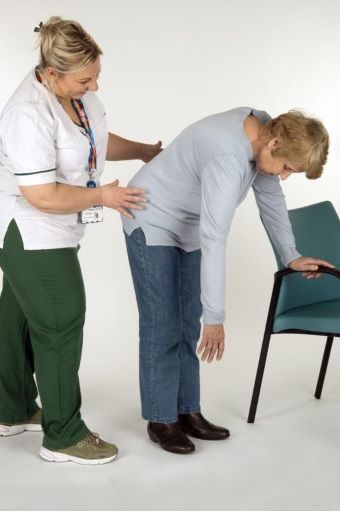
Remove your sling and straighten your arm. Standing is a good position for this. If you cannot stand up, you can do this in any comfortable position.
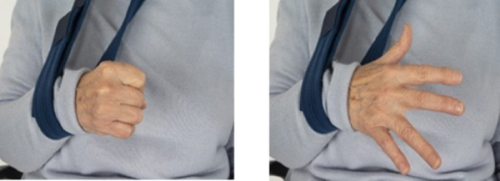
Make a tight fist and open your hand fully throughout the day.
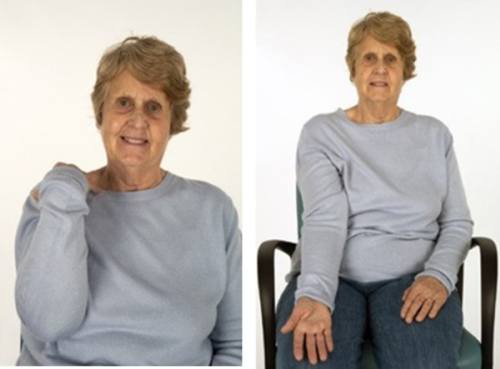
Bring your hand towards your shoulder then straighten your arm. Use your other hand to help, if needed, until your confidence improves.
Exercises: 2 to 6 weeks
Continue with the exercises from weeks 0 to 2 and add the following exercises around 2 to 3 weeks after your injury.
Keep your shoulder and arm moving and gradually increase activity as you recover. Use your injured arm for everyday tasks, such as lifting a cup or washing your face, using your other arm for support if needed. Once you can comfortably touch your mouth, practise reaching the top of your head.
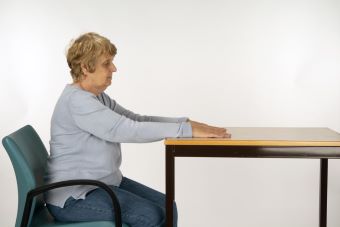
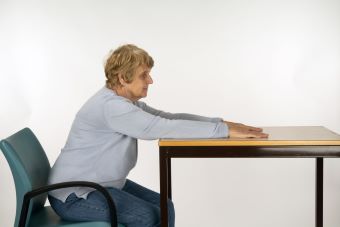
Place your hands on a table. Slide your hands along the table as far as you can without lifting your shoulders.
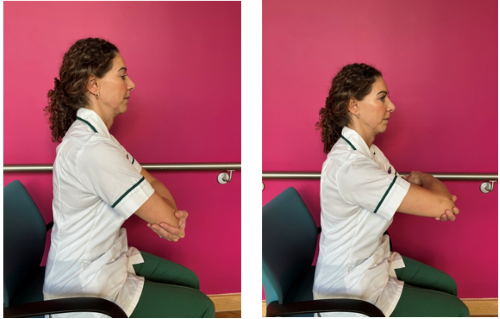
Place your hand under the elbow of the injured arm. Lift gently until you feel a stretch at your shoulder. Gradually increase how far you lift your arm.
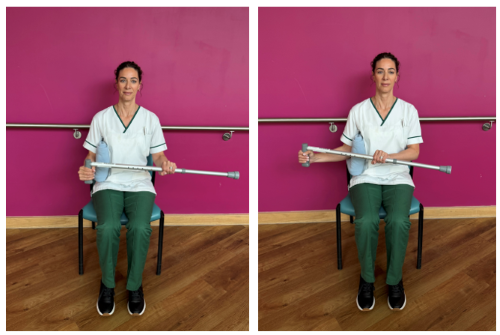
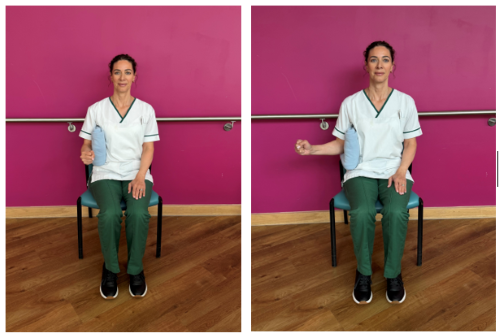
Place rolled up towel between your elbow and your side. Hold a stick with both hands. Slowly turn the arm outwards using the stick to help, as far as comfortable. You can also do this exercise without a stick as long as you feel a stretch at the front of your shoulder.
From 6 weeks
Stop using your sling after 6 weeks. Continue with the previous exercises and gradually increase how much you use your affected arm in everyday activities. The exercises may still feel difficult but try to build up little and often.
If you have significant, ongoing pain that affects your function or quality of life after 6 weeks, please contact the Frailty Trauma ACP on 07511 166031.
If you would like additional exercises, speak to a healthcare professional about referral to physiotherapy if this has not already been arranged.
Bone health and fracture prevention
A fracture that has happened easily after a minor injury such as a trip or fall is known as a fragility fracture. It is often the first sign that bones have lost some of their strength and structure.
Having a fragility fracture increases your risk of future fractures. You may be contacted by the Fracture Liaison Service, your hospital team, or your GP to complete a fracture risk assessment. This assessment helps identify your risk of further fractures and whether you may benefit from investigations or treatment to improve bone strength.
For more information, visit the Royal Osteoporosis Society website at Royal Osteoporosis Society - Better Bone Health for Everybody | Royal Osteoporosis Society or contact their specialist nurse helpline on 0300 102 3030 or via email at: nurses@theros.org.uk
The Bristol, North Somerset and South Gloucestershire (BNSSG) ‘Healthier Together’ website has useful resources for strength, balance and falls prevention which can be found at Preventing falls and staying well - BNSSG Healthier Together
How to contact us
Frailty Trauma Advanced Clinical Practitioner (ACP)
07511 166031
Fracture Clinic appointments
0117 414 1260
Single Point of Access
Sirona community based assessments
0300 125 6789
For general enquiries or feedback on this information please email bft.ftp@nhs.net.
Date published: 16 October 2026 Review due: 31 October 2029 PI number: BFT003298