
Eating After Bariatric Surgery
 Weight loss surgery isn’t a ‘quick fix’ or a certainty that you will lose weight. It is a tool to help your weight loss. Successful weight loss will be entirely down to you making good dietary choices and being as physically active as possible. In the initial period after surgery you will only be able to eat very small portions and will probably not feel hungry. Both these factors may change with time.
It is important to realise that we don’t always eat because we are hungry. We might eat out of habit or because we have learned to turn to food as a comfort when we are bored, or upset, or even happy. This “head hunger” does not disappear with surgery and you must learn to overcome this if you want to be successful with your weight loss.
You should start to practice the following skills in preparation for surgery. These are designed to help you adapt to life after the operation.
- Have three small meals a day. Choose quality over quantity – go for healthy, great tasting, textured food in smaller but delicious servings.
- Avoid snacking between meals unless you are genuinely hungry. Try to choose a piece of fruit or other healthy option.
- Eat slowly: put a small amount of food in your mouth at a time and chew this very well. Eating at a table without any distractions (no TV) and putting down cutlery between mouthfuls can help.
- Do not aim to eat until you are ‘full’. After surgery, overeating will stretch your stomach pouch, causing discomfort and may make you vomit.
- Do not drink with meals. Wait at least 30 minutes after a meal before you have a drink. Make sure you have at least 2 litres of fluid a day.
- Avoid all fizzy drinks.
- Choose textured foods that satisfy your stomach. Drinking high calorie liquids or eating foods that ‘melt’ (crisps, chocolates, cakes, biscuits, ice-cream) will mean that you won’t lose weight. These foods slip straight through, don’t make you full and result in a very high calorie intake. Your dietician will provide information on appropriate ‘textured’ foods.
- Get out and be active! Swap computer and TV time with active time to improve fitness and energy levels and get the most out of your weight loss.
Certain foods can be a problem for some people. These can include chewy meats, soft white bread, rice, fibrous fruit and vegetables, nuts and seeds. These should be avoided at the beginning and re-introduced slowly once a ‘normal’ diet has been established. Everyone is different as to what they can manage and you will need to find out what is right for you by trial and error.
You will be given lots of help and information about the pre and post-operative diets that need to be kept to by our dieticians and nurses.
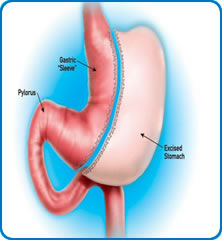 This operation involves removing approximately 80% of the stomach, leaving a thin tube or sleeve (about the width of your thumb) which holds about 50-100mL of fluid (about ½ cup of tea). The ‘gut’ or digestive tract remains intact below the stomach. It works by restricting the volume of food you can eat. It also removes some stomach cells that produce a hormone that controls hunger, so patients often don’t feel as hungry afterwards. This has positive effects on diabetes and often patients can stop their medication after surgery. The operation takes about one hour and the hospital stay is 1 day.
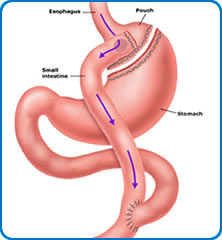 The gastric bypass is a more complicated procedure and involves the creation of a small pouch at the top of the stomach with staples. The remaining stomach stays in place. A section of intestine is ‘plumbed’ into this pouch so that the food bypasses the rest of the stomach and enters the intestine lower down. There are therefore two joins of the intestine inside. It works by limiting the amount you can eat at each mealtime but also by altering the hormone levels produced by the gut to improve diabetes and make you less hungry. The operation takes about one hour and the hospital stay is usually 1 day.
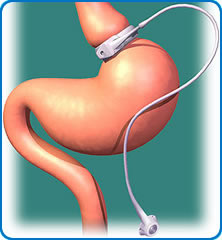 The band consists of a silicone tube with a balloon device on one end and an inflation port on the other. It is fitted at the very top of the stomach with a small ‘inflation port’ underneath the skin on the left hand side of the tummy. It works by dimming the appetite and slowing your eating down. This, together with behavioral changes and mindful eating aims to result in lessening the volume of food you eat. The tightness of the band can be adjusted by altering the volume of liquid within the band by a simple injection into the port. The operation takes less than an hour, although there is time taken in both putting you to sleep and waking you up afterwards so the overall time away from the ward is three to four hours.