General ultrasound - information for patients

Regular Off On Imaging Patient Information Ultrasound (general)

Welcome to the Imaging Department

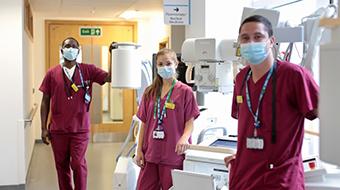
The Imaging Department may also be called the X-ray or Radiology Department. It is the area of the hospital where examinations of patients are done like CT scans, MRI scans, and ultrasounds.

Radiologists are doctors specially trained to read the images and carry out more complex examinations. They work with radiographers and sonographers who are highly trained to do X-rays and other imaging procedures.

What is an ultrasound scan?

An ultrasound scan builds up a picture using sound waves that cannot be heard by the human ear. Ultrasound images are used for many different body parts. 

Are there any risks?

There are no known risks.

Do I need to prepare in advance?

Often you will need to prepare for a scan. For example, if your pelvis, kidneys, or bladder are being scanned, you may need to have a full bladder. For areas like the liver, you may need to not eat for several hours. If so, this will be explained in your appointment letter.

If you feel you may have difficulties preparing please contact our bookings team. The contact number is on your appointment letter.

Can I bring somebody with me?

Yes, you can bring a friend or relative with you. It may not always be possible for them to come with you into the scanning room. Please ask if you would like them to and we will try to accommodate your request.

What will happen when I arrive?

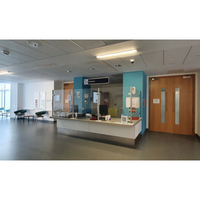
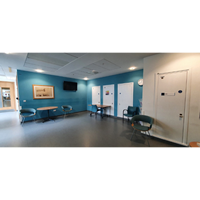
Please go to the reception desk. You will be shown where to wait until a member of staff comes to collect you. If you are coming to Southmead Hospital, please follow the check-in process outlined in your appointment letter.

There are toilets in the department. Please do not use the toilet until after the examination if you have been asked to fill your bladder.

Who will I see?

You will be seen by a radiologist or a sonographer depending on the type of scan you are having.

North Bristol NHS Trust is a teaching hospital; there may be a trainee present for some examinations. They will be introduced at the beginning of the examination. If you would prefer them not to be there, please tell the radiologist or sonographer.

Will I need to undress?

We will tell you if you need to remove any clothes before your examination. Private areas are available if you need to take off your outer clothes or put on a hospital gown.

What happens during the scan?

You will lie down on a couch, and we will dim the lights so that the images on the screen can be seen more clearly. We will put gel on your skin over the area to be scanned.

You may be asked to take deep breaths and to hold your breath for a few moments. For a scan of the bladder, it is sometimes not full enough for the examination and you may be asked to drink more fluid and wait while the bladder fills up.

The radiologist/sonographer will move the ultrasound probe over your skin while viewing the images on a screen. Some images will be saved so that they can be viewed later.

After the examination is finished, the gel will be wiped off and you will can get dressed.

Will it be uncomfortable?

Ultrasound itself does not cause discomfort and apart from the probe on your skin you should not feel anything.

Occasionally it may be necessary to push over an sore area to check what is causing the pain. This may cause discomfort for a short time.

If your bladder is uncomfortably full, please tell the radiologist/ sonographer so that this part of the examination can be done first. You can the leave the room to empty your bladder before returning to finish the examination.

Intimate examinations

If you are having an intimate examination the radiologist or sonographer will explain the procedure to you and ask for your permission to do the scan.

Please note: we have male and female staff performing these examinations. If you would prefer a male or female to do your examination, please contact our bookings team. The number is on your appointment letter, we will be more than happy to accommodate your request.

Female patients - for examinations of the womb or ovaries

Female patients: for examinations of the womb or ovaries. A “transvaginal” ultrasound means “through the vagina”.

You will be asked to empty your bladder before this scan is done. During the procedure, you will be asked to lie on your back with your knees bent.

A small ultrasound probe with a clean cover, not much wider than a finger, is then gently passed into the vagina and pictures of your organs are sent to a monitor.

Internal examinations may cause some discomfort, but don’t usually cause much pain and shouldn’t take very long.

If you have not been sexually active before, the internal scan can still be done, if you understand what it involves and agree to it. If you do not want an internal scan, that is completely fine. Please just make sure your bladder is full for the first part of the scan on top of your tummy If it is not, you may be rebooked.

In most intimate scans, a chaperone will be present and if there is not, you may request this if you wish. Please let the person doing your scan know when you arrive for your scan.

How long will it take?

The process of doing a scan usually takes around 10-20 minutes. Unless emergency patients delay your appointment, your total time should be less than an hour.

Are there any side effects?

No. You can drive afterwards, and return to work.

Can I eat and drink afterwards?

If no other tests are needed, you can eat and drink normally after your scan.

When will I get the results?

After the scan, we will review the pictures from the scan and prepare a report for the doctor on what we have seen. This may take time to reach the doctor who sent you, but is normally less than 14 days. You could ask the radiologist/sonographer how long it might take to get the results.

References

Ultrasound scan - NHS 

© North Bristol NHS Trust. This edition published July 2025. Review due July 2028. NBT002024.

It's okay to ask

Illustration of 3 clinicians wearing blue scrubs with stethoscopes around necks

Find out about shared decision making at NBT. 

Support your local hospital charity

Southmead Hospital Charity logo

See the impact we make across our hospitals and how you can be a part of it. 

Vascular Testing Team

Regular Off Off

Meet the Vascular Testing Team

Vascular Testing Team


We are part of the Bristol, Bath, and Weston Vascular Network, working alongside vascular consultants, interventional radiologists, podiatrists and vascular specialist nurses.

We provide a diagnostic scanning service for all inpatients at Southmead Hospital requiring specialist diagnostic vascular ultrasound as well as an outpatient service to the wider North Bristol Trust and local healthcare community.

As well as the vascular network, we work in collaboration with many departments including:

  • Stroke services
  • Cardiology
  • Renal
  • Emergency Department 

Our team comprises of six fully accredited vascular scientists (Society for Vascular Technology), two vascular scientists (National Scientific Training Programme) working towards full accreditation and one trainee vascular scientist on the Scientific Training Programme.

The wider team consists of two renal specialist nurses with a Postgraduate Diploma in Medical Ultrasound, two vascular technicians with an NVQ Level 3 diploma in abdominal aortic aneurysm screening and an administration team.

Patient Initiated Follow-Up

Regular Off Off

Patient Initiated Follow-Up at Southmead Hospital

We are now offering some of our patients the opportunity to initiate their own follow-up outpatient appointment.  This means that instead of the hospital automatically arranging a follow-up appointment, you will be able to contact us if you need a follow-up appointment, within an agreed timescale. 

If patient-initiated follow-up is suitable for you, your clinician will discuss what it means and when you should contact us.  If your symptoms return, get worse, or do not improve, during the timeframe agreed with your clinician, you will be able to request a follow-up outpatient appointment.


How to request an appointment

You should contact the Centralised Outpatient Services Patient Contact Centre on 0300 555 0103 or visit www.nbt.nhs.uk/outpatients.

Please let the Call Handler know that you are on a patient-initiated follow-up pathway and would like to instigate a follow-up appointment with your specialty team.

You will either be added to a waiting list and an appointment made for you as soon as possible, or the specialty team will contact you directly to discuss your condition. 

If your symptoms return, get worse or do not improve after the patient-initiated follow-up period has passed, you should contact your GP who may decide to make a new referral to the relevant specialty.

Nutrition & Dietetics Inherited Metabolic Diseases

Regular Off Off

Inherited Metabolic Diseases

Suzanne Ford and Simone Whiteway specialize in managing the diets of people with Inherited Metabolic Diseases (IMDs). These are a group of genetic conditions that vary in severity and rarity, and which for some, diet is the primary and often only treatment.

IMDs can result in a dangerous imbalance of chemicals in the blood, which can lead to disabilities, organ damage or damage to the unborn baby. Some of the conditions we help manage include phenylketonuria (PKU) and other amino acidopathies, fatty acid oxidation defects, glycogen storage disorders, disorders of carbohydrate metabolism, organic acidurias, peroxisomal defects, fish odour syndrome and many others. 

We aim to educate patients and their families, carers and other health professionals on the dietary management, food preparation, specialist prescriptions and complex food choices needed in treating these disorders.

Our service is primarily outpatient based, working as a part of the consultant led clinic, and working closely with all members of the IMD team.

If you feel you would benefit from seeing an IMD dietitian, please ask your Inherited Metabolic Disease team or your Consultant Chemical Pathologist. 

Contact Nutrition & Dietetics

Kendon House
Kendon Way
Southmead Hospital
Bristol

Telephone:  0117 414 5428 or 0117 414 5429

About Severn Major Trauma Network (SMTN)

Regular Off Off
map of South of England Major Trauma network

Network aim

The Severn Major Trauma Network is committed to reducing avoidable deaths and life-limiting injuries. We aim to improve care for seriously injured patients across the whole patient pathway from the point of injury to rehabilitation. This is achieved by collaboration between multiple specialties, professions and organisations. We strive to ensure patients gain the best outcomes to regain independence after serious injury (which can sometimes be life-changing), getting patients back to their previous lives, roles within their family and social networks, work and education. 


Philosophy of care

As a network, we aim to deliver exceptional care for all our patients. This care should be of the highest quality, delivered with respect and dignity in a safe environment, regardless of where in the region your incident happens or where you receive your care. This care is individually tailored for the needs of each patient and will involve their families or carers as appropriate.

Our Network strives to ensure care coordination and holistic management and support for patients throughout their stay in hospital, onwards to any local hospital/service; guiding patients through these transitions in their recovery. 

We constantly evaluate and improve the care that is delivered by adhering to a robust governance programme that includes participation in audit, education and research, feeding into national bodies to continually improve care and rehabilitation after Major Trauma. 
 

Three blue bubbles at each point of a triangle. Each bubble has an icon and heading and represents the three elements - patient, staff, and carer.


Major Trauma Unit rehabilitation contacts

Bristol Royal Infirmary (BRI) - RehabPrescription@uhbw.nhs.uk

Gloucestershire Royal Hospital (GRH) - ghn-tr.rehab.prescriptions@nhs.net

Great Western Hospital (GWH) - GWH.trauma@nhs.net

Musgrove Park Hospital (MPH) - RehabCoordinator@tst.nhs.uk

Royal United Hospital (RUH) - ruh-tr.trauma-rehab@nhs.net

Yeovil District Hospital (YDH) - orthopaedictherapyteamdiary@somersetft.nhs.uk/ neurotherapy@somersetft.nhs.uk / Respiratory.Physiotherapy@SomersetFT.nhs.uk

South West Maternal Medicine Network: Meet the team

Regular Off On
Dr Johanna Trinder smiling at the camera

Lead Obstetrician and Cardiology Obstetrician for the South West Maternal Medicine Network, University Hospitals Bristol and Weston NHS Foundation Trust

Dr Johanna Trinder

I am a consultant obstetrician with expertise in maternal medicine. I  qualified in London 1990, moved to Bristol in 1994 and took up my consultant post at University Hospitals Bristol in 2003, in Obstetrics and Maternal Medicine.

I hold an Honorary Senior Lectureship at the University of Bristol and am a Fellow of the Royal College of Obstetricians and Gynaecologists. I am a member of the MacDonald Obstetric Medicine Society, the British Maternal Fetal Medicine Society and  secretary of the UK Maternal Cardiology Society, since its its foundation in 2019.

I have a long term interest in education, hold the Diploma in Postgraduate Medical Education and have organised numerous local, regional and national maternal medicine teaching events. I am also Head of School for O&G Postgraduate Education South West-Severn and am a qualified coach/mentor, holding the Institute of Learning and Management level 5 certificate in Coaching and Mentoring.

I have developed and led the tertiary maternal medicine service at University Hospitals Bristol over the past 19 years and set up the Regional Cardiac Obstetric Network ft in 2005, which was the first of its kind in the UK. I have been invited to lecture and teach at many national meetings and courses. I keep my knowledge up to date by attending national and international meetings and am involved in contributing to, and reviewing national guidelines on management of pregnant women with medical problems. I have published research in the field of maternal medicine, predominantly on the subject of heart disease in pregnancy.

Outside of work I spend my free time dog-walking, gardening, sailing and seeing friends

Head and shoulders photo of Obstetric Physician Lead Francesca Neuberger wearing dark green scrubs

Obstetric Physician Lead for the South West Maternal Medicine Network and Acute Medicine Consultant, North Bristol NHS Trust

Dr Francesca Neuberger MBChB FRCP

I have been an Acute and Obstetric Physician at North Bristol NHS Trust since 2016, having undertaken fellowships in Obstetric Medicine and Medical Education in London.

I am the Obstetric Physician lead for the South West Maternal Medicine network, and maintains a keen interest in medical education.

Head and shoulders photo of midwife Hannah Collins smiling at the camera

Maternal Medicine Specialist Midwife, University Hospitals Bristol and Weston NHS Foundation Trust

Hannah Collins

I qualified as a midwife in 2016, and worked in South Devon until moving to Bristol in 2017.

I have worked in many different departments including Central Delivery Suite, Antenatal/Postnatal Ward, Transitional Care Ward and the Midwifery Led Unit.

I have worked as a core midwife on the antenatal /postnatal ward since late 2019, and still do part time. I started my new role as maternal medicine specialist midwife for the network in April 2022.

I have a special interest in women who have medical conditions, how this affects their pregnancy, and vice versa.

I am passionate about providing high quality midwifery care and making sure all women within the South West Network have equal access to specialist care. I ensure all women are supported throughout their pregnancy journey by providing education to their care providers and making sure they receive the specialist care/support they need from our MDT team.

I also sit in on our maternal medicine clinics and therefore will see women who require care at our maternal medicine centre, and see them during their hospital admissions, if necessary. 

Picture of midwife Stacy Hazelhurst in navy blue scrubs, smiling at the camera

Maternal Medicine Specialist Midwife, North Bristol NHS Trust

Stacy Hazlehurst

I have been a midwife since 2005 and have spent the majority of my career at Southmead Hospital.

I have a keen interest in women with pre-existing medical conditions in pregnancy. 

I also enjoy education and have been involved in multidisciplinary teaching for emergency scenarios within obstetrics and look forward to applying my interests to the South West Maternal Medicine Network.

Head and shoulders photograph of Rebecca Simms

Consultant in Obstetrics and Maternal-Fetal Medicine, University Hospitals Bristol and Weston NHS Foundation Trust

Dr Rebecca Simms MD, MRCOG, DFRSH, MBChB

I have been a Consultant in Obstetrics and Maternal-Fetal Medicine at St Michael's Hospital, University Hospitals Bristol and Weston, since 2015. Prior to becoming a Consultant I trained in Obstetrics and Gynaecology and then completed my subspecialist training in Maternal-Fetal Medicine (SST MFM) in the Severn postgraduate deanery. 

I have been the Lead Obstetrician for Haematology since becoming a Consultant and am a member of the British Society for Haematology Obstetric Haematology Special Interest Group.

I work very closely with our Obstetric Haematologist and colleagues at the Bristol Haematology and Oncology Centre. As our Trust is the tertiary referral centre in the South West for Haematology, I am closely involved in managing women from across our region with an extensive range of haematological conditions as part of our experienced multidisciplinary team.

I am also the South Bristol Obstetric Academy lead for the Reproductive Health and Care of the Newborn (RHCN) course, a part of the University of Bristol’s Medical Undergraduate Degree.

Head and shoulders picture of Dr Jenny Blackman

Consultant in Obstetrics and Gynaecology, Royal Devon and Exeter Hospital

Dr Jenny Blackman MB ChB MRCOG

I have been an Obs and Gynae consultant in Exeter since 2018 and trained in the Peninsula region. I run a weekly antenatal clinic for women with pre-existing medical conditions and regular preconception clinics.  

My other interests are in teaching at the UEMS and management of prolapse.

Head and shoulders photograph of Dr Stephanie Curtis in a non-clinical environment

Consultant Obstetric Cardiologist, Bristol Heart Institute, University Hospitals Bristol and Weston NHS Foundation Trust

Dr Stephanie Curtis BSc (Hons) MB ChB MD FRCP FESC

I am a consultant cardiologist, based at the Bristol Heart Institute, University Hospitals Bristol and Weston NHS Foundation Trust. I specialise in congenital heart disease in the adult (ACHD), heart muscle disease and aortic disease, as well as obstetric cardiology. I run regular clinics in Gloucester Royal Hospital and Musgrove Park Hospital in Taunton. 

I attended medical school in Edinburgh and subsequently did most of my training and doctorate in London. I took up a specific ACHD training post in Bristol as a senior registrar in 2003 and has been in post as a consultant since 2008. I have been looking after pregnant women with heart disease as part of a multidisciplinary clinic since 2003 and have a wide experience of all aspects of obstetric cardiology, consulting daily throughout the South West.

I am a Fellow of the Royal College of Physicians and European Society of Cardiology. I regularly present and chair at regional and national cardiology and echocardiography meetings. I have had published papers and book chapters in my  areas of expertise. 

I am a keen amateur triathlete, runner and open water swimmer. I am also an avid member of the informal BHI book club and a single mum to two teenage sons and a variety of pets! 

Consultant in Obstetrics & Maternal Medicine, University Hospitals Bristol and Weston NHS Foundation Trust

Dr Marie O'Sullivan MRCOG MSc (Medical Education)

I am a consultant based at UHBW in obstetrics and maternal medicine, working across the Bristol and Weston sites.

Throughout my career I have forged an active role in medical education; I am currently College Tutor for Obstetrics & Gynaecology at UHBW and the Education and Training Representative for BMFMS.

As a trainee I was the Vice Chair (Education) for the RCOG National Trainee’s Committee and completed a Masters in medical education focussing on curriculum design.

The pregnancy journey is a unique time for healthcare interactions with a large number of  specialty interactions and huge motivation for change. I am excited to work with the network to provide cross-specialty education opportunities.

Obstetric Rheumatologist for the South West Maternal Medicine Network, North Bristol NHS Trust

Dr Fang En Sin

I have been a Consultant Rheumatologist at North Bristol Trust since 2020. I am dual accredited in Rheumatology and General Internal Medicine, having trained in Kent, Surrey, Sussex and UCLH London.

I am a general rheumatologist, but I have sub-speciality interests in autoimmune connective  tissue diseases/ vasculitides and in complex biologics.

I am also a member of the national HiHASC network, having developed an interest in haemophagocytic lymphohistiocytosis during my training in UCLH London, and a firm belif in the value of regional/ national specialist MDT network for the benefit of patient outcome.

Education Lead for the South West Maternal Medicine Network and Consultant Obstetrician, North Bristol NHS Trust

Associate Professor Christy Burden

Together with Dr Standing (Consultant Obstetrician) and Dr Neuberger (Consultant Obstetric Physician) I have led the Maternal Medicine and Diabetes in Pregnancy Service at North Bristol NHS Trust for the last four years. During the same timeframe I have led the Diabetes in Pregnancy service in the Trust.

I have experience and expertise of working in an education setting, first as an Academic Clinical Lecturer and now as an Associate Professor and Consultant Obstetrician. My drive and enthusiasm for education has led me into numerous roles within medical education throughout my career.

I am a clinical academic and Head of the Academic Women’s Health Research Unit at the University of Bristol and the NIHR CRN Reproductive Health Speciality lead for the West of England.  I continue to strive to develop high quality and high impact education and research that will most importantly directly improve patient care and change practice both nationally and internationally.

Consultant Nephrologist, North Bristol NHS Trust

Dr Alison Armitage

I was appointed as a Consultant Nephrologist at Southmead Hospital in Bristol in 2007. I regularly practice all aspects of nephrology including transplantation, dialysis and general nephrology. My specialist clinical interest and passion is in managing women with chronic kidney disease (CKD) in pregnancy.

In 2012, together with Dr Judith Standing I established a joint renal antenatal clinic. As a result we have built extensive experience in dialysis in pregnancy and care provision at all stages of CKD including for kidney and SPK transplant recipients, immune related kidney conditions and inherited renal disorders.

We also run a separate pre pregnancy counselling clinic for these high risk women to talk about the impact of pregnancy on their renal condition and of their renal condition upon pregnancy. We look to optimise their kidney disease and medications in preparation.

I am the South West representative on the National Pregnancy and CKD Rare Disease group. My research interests are related to renal disease and pregnancy.

I want to ensure all women with kidney disease across the South West have equity of access to best care pathways and clinical advice. I believe that joint obstetric/nephrology care of women with CKD provides better outcomes for themselves, their kidneys, and their babies.

Lead Nephrology Obstetrician for South West Maternal Medicine Network, Consultant Obstetrician, North Bristol NHS Trust and South West Regional Lead Obstetrician NHSE

Dr Judith Standing MBChB MRCOG

I have been a Consultant Obstetrician with a special interest in Maternal Medicine for 16 years. Together with Consultant Nephrologist, Dr Alison Armitage, I have provided a joint regional and local Nephrology ANC and pre-pregnancy counselling service at North Bristol NHS Trust for over 10 years.

In my role as Regional Lead Obstetrician, I also work with the National Maternal Medicine Team at NHSE on the implementation and development of Maternal Medicine Networks across England.

The importance of eating well in hospital

Regular Off Off

Why have I been given this information?

Every person admitted to hospital is screened for malnutrition risk. You have been highlighted as being at risk of malnutrition.

What is malnutrition?

Malnutrition is when your body does not get all the nutrients (e.g. energy or protein) it needs to function properly.

Malnutrition can occur if:

  • You have a low body weight.
  • You have recently lost weight.
  • You have a reduced appetite.
  • You have increased need for nutrition due to illness or surgery.

Malnutrition increases the risk of complications such as:

  • Infection
  • Falls
  • Pressure ulcers
  • Tiredness
  • Heart and breathing problems
  • Increased length of stay in hospital

Why is it important to eat well in hospital?

Eating well in hospital will reduce the risk of malnutrition and the associated complications.

Improving your food intake will help you to:

  • Fight infection.
  • Heal wounds and broken bones.
  • Do more for yourself and make you feel brighter.
  • Give you more strength to move around and breathe better.
  • Stay in hospital for less time.

How to improve your food intake

If you find you can’t eat very much at meal times try eating smaller portions but more often.

  • Ask for a milky drink such as a glass of hot or cold milk, Horlicks, Ovaltine or drinking chocolate between meals instead of tea or coffee.
  • You will be offered a special high energy milkshake such as Meritene shake or Fortisip Compact protein.
  • Have a biscuit or piece of cake with your drink between meals.
  • Ask the nurse looking after you for a slice of toast or bowl of breakfast cereal at bedtime. These foods are always available in the ward kitchen.
  • Ask your friends and relatives to bring in cartons or fruit juice (such as orange juice or cranberry juice), smoothies or non-diet fizzy drinks. Have them between meals rather than drinking squash.
  • Desserts: The best choice is a small helping of sponge and custard, crumble and custard, milky pudding, bread and butter pudding or cheese and crackers.

What could my friends and relatives bring in?

Visitors may like to bring in food or drinks to help you get better.

We have to be careful that foods brought in won’t make you ill. For that reason, only foods that can be kept safely in your bedside locker may be brought in. Sandwiches and fresh cakes need to be eaten immediately. They cannot be ‘kept for later’.

Here are some ideas for foods you can bring in:

  • Biscuits, breakfast and cereal bars.
  • Small boxes of breakfast cereals.
  • Cake portions, muffins, flapjack, shortbread.
  • Individual pots of long-life rice pudding, crème desserts or custard. 
  • Long-life yoghurts or milkshakes.
  • Small cartons of fruit juice.
  • Sachets of Build-up soup or milkshakes.
  • Sachets of Complan soups or milkshakes.

Suggested meal plan

Breakfast

Porridge or cereal with milk and sugar.

Carton of fruit juice.

Mid-morning

Cup of hot or cold milk and a biscuit.

Mid-day meal

Main course followed by dessert.

Mid-afternoon

Milky drink or fruit juice and biscuits or portion of cake.

Evening meal

Build-up soup, sandwich or portion of hot meal.

Portion of milk pudding, yoghurt or blancmange.

During evening

Milk-based drink such as drinking chocolate or Horlicks.

Portion of cheese and biscuits, a slice of toast or a small bowl of breakfast cereal.

Other tips

  • Ward staff are busy but they want to help you get better. Don’t be afraid to ask if any milky drinks or snacks are available. Milk, bread and breakfast cereals are usually available in the ward kitchens. 
  • It is important for you to be as well-nourished as possible because it helps you get better

If you or the individual you are caring for need support reading this leaflet please ask a member of staff for advice.

If you’re an overseas visitor, you may need to pay for your treatment or you could face fraud or bribery charges, so please contact the overseas office: Tel: 0117 414 3764 Email: overseas.patients@nbt.nhs.uk

Bleeding in early pregnancy

Regular Off Off

This information is for women experiencing bleeding or spotting in early pregnancy.

Bleeding in early pregnancy can be very worrying. This leaflet aims to provide some information and guidance, and answer some commonly asked questions, which we hope will provide some reassurance for you at this uneasy time.

What is bleeding and spotting in early pregnancy?

Bleeding or spotting in early pregnancy is a common occurrence, with up to 25% of women experiencing spotting or bleeding in the first 12 weeks of pregnancy. Unfortunately it is sometimes an indication that you are having a miscarriage, but around half of women who experience bleeding or spotting in early pregnancy carry on to have a normal pregnancy.

Spotting in pregnancy is often identified when a woman notices spots of blood on her underwear or on tissue after wiping.

You may also notice some pink, brown, red or dark red blood. Sometimes women may pass fresh red blood, or clots. Some women also notice some string like tissue coming from their vagina.

Bleeding is sometimes associated with pain, but not all the time.

What can cause bleeding in early pregnancy?

  • Implantation bleed (normal pregnancy). Many women experience bleeding when the pregnancy implants in the womb.
  • Threatened miscarriage. This is where there is vaginal bleeding in women under 24 weeks pregnant, with no dilation of the cervix. The pregnancy continues as normal - this occurs in around 20% of all pregnancies.
  • Miscarriage.
  • Ectopic pregnancy. This is a pregnancy which develops outside of the uterus, this occurs in 1 in 80 pregnancies
  • Bleeding from the cervix. Hormonal changes in pregnancy result in changes to the cervix, this commonly causes bleeding.
  • No obvious cause. Sometimes it is not possible to identify the cause of bleeding.

Bleeding is not caused by anything you have done - even if you have had a miscarriage. Most miscarriages occur because there is something wrong which cannot be prevented.

What can I expect whilst in the Emergency Department?

Streaming

After you arrive in the Emergency Department you will be asked some brief questions by one of our experienced nurses. 
If you do not need emergency treatment, the streaming nurse may be able to refer you directly to a specialist service who will assess you within 72 hours. This avoids the need for you to wait in the Emergency Department.

Triage

If there is any uncertainty as to whether you need emergency treatment, a second experienced nurse will triage you. They will need to know the date of your last period, any symptoms you have, and any medical history. You will be asked for a urine sample and the nurse will check your pulse and blood pressure.

They may also take some blood samples and insert a cannula (drip) but this isn’t necessary for all women.
You may then be asked to wait to see an Emergency Department clinician, or be referred to the Early Pregnancy Clinic if you are well enough.

What next?

6-12 weeks pregnant

If your bleeding is not too heavy and you feel well in yourself, you will be referred to the Early Pregnancy Clinic. This usually involves a phone call the following working day (Monday, if this is a weekend) where the specialists will discuss your symptoms and either give you advice over the phone, or make an appointment to come into hospital for assessment. This may include blood tests and an ultrasound scan, but not every woman needs these.

If bleeding is heavy, you are unwell, or have severe pain, you will be triaged and assessed by a clinician in the Emergency Department or referred directly on to the Gynaecology Team.

Over 12 weeks pregnant or in severe pain

Depending on your symptoms you may be seen in the Emergency Department, referred directly to the gynaecology ward or, if you are over 12 weeks with light bleeding you may be referred to the Early Pregnancy Clinic. 

This usually involves a phone call the following working day (Monday, if this is a weekend) where the specialists will discuss your symptoms and either give you advice over the phone, or make an appointment to come into hospital for assessment.

Less than 6 weeks pregnant

Follow-up appointments are not routinely arranged if you are under 6 weeks pregnant. This is because light bleeding is fairly common at this stage and it is usually too early to see anything on a scan.

You should take a further pregnancy test in 1 week and contact your GP or call 111 for advice at this point if you are still worried. If you have worsening pain or bleeding at any point you should also call 111 or contact your GP.

How will I know if this is a miscarriage?

It may not be possible to tell straight away whether you are having a miscarriage, depending on your symptoms and your stage of pregnancy, even if you have an ultrasound scan. 

You may asked to come back to clinic for a repeat scan after 1-2 weeks or you may be advised to have a blood test. This can be an upsetting time and it may help to share your feelings with a partner or trusted friend or family member. There are also some support websites at the end of this leaflet which you may find helpful.

What can be done?

Unfortunately, if a miscarriage is going to happen, there is no medical treatment that can prevent it. 90% of miscarriages are due to a problem with fetal development and would never continue to be a normal pregnancy. 

Most women who miscarry can expect to experience bleeding like a period for up to 2 weeks.

If the bleeding is not due to miscarriage, it may settle on its own, or if it continues you may need to be monitored more frequently by your midwife.

If you have had your third miscarriage, there is sometimes an underlying cause which can be treated – speak to your GP who can refer you to a specialist.

If there is heavy bleeding you may need to be monitored in hospital, or if we think you may have an ectopic pregnancy you will need further assessment with an ultrasound scan. A specialist will discuss the treatment options with you.

What if I become more unwell, or the bleeding increases after I am discharged?

If you have any of the following symptoms, you should come back to the Emergency Department to be re-assessed:

  • Bleeding: If you are filling more than 2 large pads per hour, or passing clots the size of your palm.
  • Fainting or feeling faint.
  • Severe or increasing pain in your pelvis, abdomen, or shoulder.

Frequently asked questions

Have I done anything to cause the bleeding?

No. Bleeding is not caused by anything you have done - even if you have had a miscarriage. Most miscarriages happen because there is something wrong which cannot be prevented.

Should I use tampons or pads?

Sanitary pads are the safer and better option. Please ensure they are changed regularly.

Can I still have sex?

Whilst sexual intercourse is safe during pregnancy, we advise waiting until any spotting or bleeding has completely stopped until resuming sex.

Can I still go to work?

It is not necessary to stay off of work, however ensure you are getting adequate rest if you are tired. You can self-certificate for 3-7 days, after this you will need to contact the GP who can assist you.

Can I have a bath?

Although showers are more hygienic whilst you are bleeding, it is safe for you to have a warm bath.

If you need any further advice or information 

Useful organisations and websites

The Miscarriage Association

For support and information:
Phone: 01924 200799 (Monday to Friday, 9am to 4pm)
Email: info@miscarriageassociation.org.uk 
The Miscarriage Association: Pregnancy Loss Information & Support

Ectopic Pregnancy Trust

Phone: 01895 238 025
Email: ept@ectopic.org 
The Ectopic Pregnancy Trust - Support For You And Your Loved Ones

The Willow Tree Centre

A local charity offering support for parents after the loss of their pregnancy.
Willow Tree Centre | Thewillowtreecentre.org.uk |Bristol

Mothers for mothers

Bristol based help line, online support and a directory of services for all parents
Mothers for Mothers | Postnatal mental health support

© North Bristol NHS Trust.  This edition published June 2024. Review due June 2027. NBT003376.

Contact Emergency Department (ED)

Gate 35, Level 0
Brunel building
Southmead Hospital
Southmead Road
Westbury-on-Trym
Bristol
BS10 5NB

Emergency Department Main Reception Gate 35: 0117 4145100 or 0117 4145101

We've introduced online letters for appointments

We know how important it is that you receive details about your visit to hospital quickly and easily.

That’s why we’ve introduced online letters for appointments so you can get your appointment information by text or email direct to your smartphone, tablet or computer.

Self-injury and self-harm

Regular Off Off

This information is for patients who have attended the Emergency Department following an episode of self-harm. 

Thank you for attending the Emergency Department. We understand that this must be a difficult and distressing time for you.

Our team would like to be able to offer you an assessment of your current needs in order for us to identify any help that may be beneficial to you. 

It is also important that you have any physical healthcare needs addressed. We would therefore like you to wait to be seen by the triage nurse and the admitting doctor. 

Whatever your reason is for attending the Emergency Department, we aim to treat you with respect, dignity, and in confidence.

What is self-injury and self-harm and who does it affect?

Self-injury or self-harm can be many things that people do to themselves in a deliberate and often hidden way like cutting, burning, overdosing, scratching, biting, hair pulling and breaking bones. 

Sometimes people think they are the only ones doing it but research shows that it is very common. 

In the UK at least one in every 15 young people has experience of self-injury. That is two young people in every classroom. 

Why do people self-injure or self-harm?

People self-injure and self-harm for all sorts of reasons, but often it is because feelings like anger, sadness, and fear have got too painful to deal with. 

Sometimes people self-injure or self-harm because of the pressure and stress from things like relationships, family problems, school, work, finances, debt and sexual worries. It may be way of dealing with horrible situations like abuse or the death of someone close. 

You may not know why you self-injure or self-harm. If you think back to the first time, then you may understand what made you start. 

Notice what is going on for you when you get the urge to self-injure and you may get clues as to what your self-injury or self-harm is about.   

Wound care: 

If you require any advice or instructions around wound care please ask a nurse before you leave or attend your GP surgery as soon as possible for assistance. 

Please visit Wound care advice | North Bristol NHS Trust (nbt.nhs.uk) for advice about wound care. 

Sources of Support and information. 

Self Injury Self Help Group (SISH)
www.sishbristol.org.uk/support-groups

Self injury helpline 
Available Tuesday and Wednesday 7pm-9 pm
Thursday 3pm-5pm
Phone: 0117 230 8230     
Email: sishbristol@gmail.com 

Self injury support 
www.selfinjurysupport.org.uk

National Self Harm Network
Online peer support forums
www.nshn.co.uk

NHS direct 
Phone: 111

Bristol Mindline
Wednesday to Sunday, 8pm – midnight
Phone: 0808 808 0330

Kinergy-Sexual Abuse Counselling
www.kinergy.org.uk
Phone: 0117 908 7712

Next Link – Domestic Abuse services – Bristol
Phone: 0800 4700 280

Survive – Domestic Violence Support Service – South Gloucestershire
Phone: 0117 961 2999

DHI – Developing health and independence, drug and alcohol service 
Bristol Phone: 0117 440 0540    
South Gloucestershire Phone: 01454 868750
Email: info@dhi-online.org.uk 

ARA, Bristol Alcohol Misuse Service 
Phone: 0330 1340 286 

Your GP maybe able to offer you more information and support services

Samaritans 24hr helpline 
Phone: 116 123

© North Bristol NHS Trust.  This edition published April 2024. Review due April 2027. NBT002890.

Contact Emergency Department (ED) Related Links (ON Emergency Department & Minor Injuries Unit)

Burns and scalds

Regular Off Off

​This information will help with any questions you may have after sustaining a burn or scald.

First aid

  • Run the burn or scald under cool water for 20 minutes or until the burning feeling begins to settle.
  • We may continue to cool the burn under water when you arrive to the Emergency Department (ED).
  • Immediate cooling is vital to stop further damage to the skin.
  • Cover the burn with a damp, clean cloth or clothing, you can also use loosely applied cling film, ensuring it is not too tight.
  • Do not pop any blisters this will be done by someone trained and in a clean environment.
  • Do not apply any creams as this can make the burn worse.

The healing process

In the ED we will apply a suitable dressing and advise you if any further dressing changes are required.

Further dressing changes can be done by your treatment room nurse based at your GP surgery; you will need to call them to arrange an appointment.

Healing can take 14-21 days. Smaller and very superficial burns may take less.

We may feel it necessary to refer you to the Burns Specialist team (Adults: Southmead Hospital, Children: Bristol Children's Hospital). If so, you will be given a follow up appointment before your discharge from the ED.

Staying hydrated by drinking well and having a healthy diet will help with healing.

Once the burn is healed it is important to protect that area from the sun, it will be more susceptible to burning. Use a high factor sun cream or keep covered with clothing when in the sun.

How to look after your dressing

  • Keep your dressing dry and clean at all times and cover the dressing when bathing or showering.
  • Ensure you have your dressing changed as advised by a health care professional.
  • If your dressing becomes dirty or falls off apply a temporary covering such as loose cling film or damp clean cloth and seek medical advice for a new dressing.
  • When a dressing is no longer needed you will be advised of this. The area can appear dry, you can apply a non-perfumed moisturiser to the affected area.

Monitor for signs of infection

If you notice any of these signs you must seek medical advice as you might have an infection.

  • Redness surrounding the dressing.
  • Feeling feverish or unwell.
  • Severe pain at the sight of the burn.
  • Unusual colour leaking through the dressing.
  • Offensive smelling odour.

Pain relief  

  • You will be given appropriate pain relief while you are in the ED undergoing treatment for your burn.
  • You can take regular paracetamol and/or ibuprofen for your burn.
  • You can take pain relief such as paracetamol and/or ibuprofen an hour before your next scheduled dressing change.

Reference

British Burns Association (2021) www.britishburnassociation.org/patient-advice

© North Bristol NHS Trust. This edition published April 2024. Review due April 2027. NBT002439.

Contact Emergency Department (ED) Related Links (ON Emergency Department & Minor Injuries Unit)