
Trust Objectives
Wide
Off
Off
Our three Trust Objectives are:
- Deliver Great Care – this includes developing our clinical strategy and working as part of an acute provider collaborative with University Hospitals Bristol and Weston NHS Foundation Trust (UHBW) to tackle our acute provider priorities. It also includes addressing national priorities around the planned care backlog and improved performance in the Emergency Zone.
- Develop Healthcare for the Future – this includes investment in leadership development and training schemes as well as growing our research portfolio.
- Be an Anchor in our Community – this involves mapping and defining our relationships with partner organisations in order to identify opportunities to tackle both health inequalities and unemployment. It also focuses on contributing to public health initiatives and sustainability.
Surgical Scars Following Breast Reconstruction
Wide
Off
Off
Following your breast surgery it is important to continue to keep the micropore tape over your scars for up to 6 weeks. The pressure of the micropore tape over your scars helps to reduce tension on the healing wound which helps reduce the risk of developing problematic scarring and improves surgical scars healing.
The tape will need to be removed once a week and new tape reapplied. You can shower with the tape on, use a hairdryer on a low heat settling to dry afterwards. If the tape comes away from the skin reapply tape.
Do not remove the tape daily as this will cause you to lose the top layers of skins cells which will hinder the healing process.
After 6 weeks you may start moisturising and massaging your surgical scars with a non-perfumed moisturiser, which helps soften and hydrate your scar tissue.
Your breast and abdominal scars may remain pink and change colour with different temperatures e.g. when you are hot they will appear red and when you are cold they will look purple. This is normal and will gradually fade over time. If your scar starts to become firm, red, raised and itchy, this may be the start of Hypertrophic scarring which may develop in healed skin within the first three months after surgery.
How your scars will heal will be determined by many different factors e.g. poor diet, infection, healing time, your past history of radiotherapy and chemotherapy and your genetic tendency to scar.
Non-surgical treatment can be used to help with the texture and colour these include moisturising and massage, silicone creams, silicone dressing and pressure garments. It is important to remember that scarring can take up to two years to fully settle and some people will need treatment for this length of time.
Scarring should also be protected from sun exposure unit the scar has fully matured (become pale and inactive) this is around 2 years.
If your scarring is giving you concerns please contact the breast reconstruction nurse for advice. You may need and benefit from treatment at our Scar Management Team at Southmead Hospital.
Abdominal Scar
Some patients decide to disguise their abdominal scar by having a tattoo. If you are considering this option you need to ensure that the scar is completely healed. The healing process takes up to 18 months to heal, therefore tattooing must not be undertaken before this time. Tattooing won’t change the texture and it won’t erase the scar.
If you do decide to get a tattoo, make sure that the tattooist is experienced and has done tattoo art for people with similar scars in the past. Ensure that you ask to see photos of their work covering up the scars before booking up your tattoo. It is important to note that the scar may not take the ink, therefore, find out if the price of the tattoo covers all subsequent visits.
Camouflage Clinic
Camouflage creams can be applied to conceal or reduce the noticeability scars. The creams and powders are available in a wide range of shades, which are matched to your skin tone. The products have been clinically tested for skin sensitivity. They are not the same as ordinary cosmetics. They are lightweight but have a far greater covering quality and stay in place for much longer. On the body creams can be safely left in place for 2-3 days. The cream is fully waterproof, so you can swim with it in place.
For an NHS appointment (for example for scarring) you will need to be referred to the camouflage clinic by your GP or hospital consultant or nurse.
Find out more about the camouflage clinic.
Pre-operative Exercises DIEP Reconstruction
Wide
Off
Off
- Position: Lie on your back, knees bent feet on floor, arms by your side.
- Action: Tighten your stomach muscles, press the small of your back against the floor, hold for 5 seconds, let go.
- Breathe out whilst tightening and breathe in as you relax.
- Position: Lie on your back, knees bent feet on floor, hands resting on your thighs.
- Action: Flatten your back, your neck, tighten your tummy muscles, curl your head forwards as you slide your hands towards your knees.
- Breathe out whilst tightening and breathe in as you relax.
- Position: Lie on your back, knees bent feet on floor, arms across your chest.
- Action: Tighten your stomach muscles, flatten your back, your neck and lift your head and shoulders off the floor.
- Lie on your back, fingers just behind your ears, elbows out.
- Tighten your stomach muscles and lift to 30 degrees.
- Breathe out whilst sitting up, breathe in and relax on the way back down.
- Sit on a stool or fit-ball with wall behind.
- Cross your arms put your hands on your shoulders.
- Lean your upper body backwards.
- Return to upright after your shoulders touch the wall.
- Lie on your back arms by side, knees bent, feet on floor a shoulder width apart.
- Action: Squeeze your bottom muscles and then lift your bottom up off the floor, hold for 3-5 seconds, slowly lower and relax.
- Lie on your front, prop yourself up by your elbows, hold position for 30 seconds.
Post-operative Exercises DIEP Reconstruction
Wide
Off
Off
- Check that your posture is returning to normal, from stooped to upright.
- Check that your shoulder movements are returning to pre-op’ range of motion.
- Recover the tone and strength in your tummy muscles.
- Abdominal muscle strength helps to keep your back healthy.
- Tummy muscles can be ‘switched off’ by pain.
Good Posture – Stand Tall
Imagine a piece of string Is attached to the crown of your head and is lifting you up.
Good Posture – Sit tall, avoid slumping or overstretching
Shoulder Movements
- Sideways and up
- Forwards and up
- Behind your neck
- Behind your back
- Across to your opposite shoulder
1. Switch on Your Tummy Muscles
- Lie on your back, hands on tummy, knees bent, feet resting on floor, legs hip width apart.
- ‘Long’ neck and back but keep the natural curve in your low back.
- Breathe in slowly and deeply.
- Breathing out, let your tummy button sink towards your spine without flattening or changing the position of your low back.
- Gently tighten your muscles below your tummy button, hold the tension for five seconds and continue breathing.
- Aim for 5-10 of these contractions several times a day.
- Concentrate on contracting the muscles below your belly button during each breath out.
2. Tummy Toning Exercises
- Lie on your back, knees bent, feet on floor, arms by your side.
- Tighten your tummy muscles as in exercise1.
- Press the small of your back against the floor.
- Hold the position for 5 seconds, let go.
3. Heel slide
- Lie on the floor with knees bent, arms by your sides.
- Hold your tummy in, as in exercise 1.
- Keep one leg stationary.
- Slowly slide the opposite leg out until it’s straight with the floor.
- Slide it back in to the starting position.
- Alternate, extending the other leg out and then back.
- Keep the natural curve of your spine without flattening your back.
- Contracting your abdominal muscles helps to keep your pelvis still whilst your leg moves and your lower tummy muscles work.
- This helps train your tummy muscles to support your spine.
4. Single leg extension
- Lie on the floor with knees bent and arms at your sides.
- Tighten your tummy in as in exercise 1.
- Raise one leg to ‘table top’ position (knees bent in line with hip, shin parallel to the floor).
- Slowly stretch the lifted leg out without arching your back.
- Return your leg to table top position.
- Bring your foot back down to the starting position.
- Switch sides.
- Progress with this until you can extend the leg out and hover it about 2-3 inches above the floor
- Work up to five repetitions on each side without stopping.
- Build to 20 "hovering" repetitions or more on each side without allowing your back or spine to move.
5. Heel Taps
- Lie on the floor, tighten your tummy muscles as in exercise 1. and bring your legs up one at a time to ‘table top’ position
(knees bent and over hips, shins parallel to floor). - Keep one leg stationary, slowly lower other foot down to the floor (keeping knee bent) and back up to table top.
- Keep your low back and spine still throughout.
- Repeat on the opposite side.
6. Knee Rolling
- On your back, knees bent, feet on the floor.
- Roll your knees down to on one side, followed by your pelvis, keep your shoulders on the floor if possible.
- Take a deep breath in and out to stretch, return to the starting point.
- Alternate 8 to 10 times.
7. Bridging
- Lie flat on the floor, hands resting by your sides. Feet flat on the floor, shoulder width apart, knees bent.
- Contract your abdominals, low back, glutes and slowly lift from tailbone up to form a straight line from your knees, through your hips to your shoulders.
- Hold this position for a few seconds, then slowly lower. The whole cycle of lift, hold and lower takes at least ten seconds.
8. Stretch
- Lie on the floor face down. Put your hands at your sides at shoulder level.
- Keep your back relaxed hips on the floor, push shoulders up, to rest on your forearms.
- Exhale when you reach the top, let your mid back sag as you exhale.
- Slowly lower yourself to the starting position.
- Push only to the point of tension, maintain your hips on the floor.
- Don’t push into pain, bounce, or force the movement.
- You should have a gentle curve in your back as you push up,
- No severe curvatures in one location.
These exercises have been developed in partnership with Keeping Abreast.
ReMemBr Group Team
Wide
Off
Off


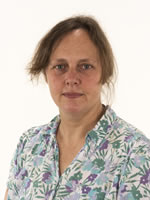
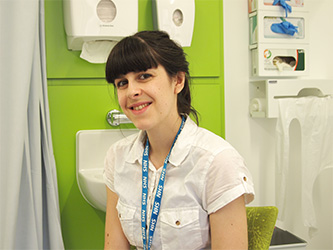

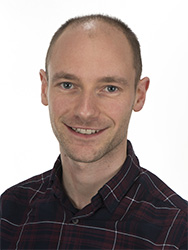
The ReMemBr Group is made up of a diverse group of researchers and clinicians.
Dr Elizabeth Coulthard, Consultant Senior Lecturer in Dementia Neurology
I trained in Oxford, London and Newcastle before settling in Bristol as a consultant senior lecturer in dementia neurology. I divide my time between clinical neurology and research into dementia and cognition. As a clinician, I see people with neurological illness and run specialist clinics in dementia, cognition and Huntington's disease. As a researcher, with the support of BRACE charity, I established the ReMemBr group where clinicians and researchers work side by side aiming to improve treatments for people with dementia and understanding brain systems that underpin cognition.
We are a flourishing clinical research community with weekly research meetings and regular attendance at national and international conferences. Current projects include clinical trials aimed at slowing dementia progression, a programme of work to better understand how dopamine in the brain contributes to memory formation and trials of medications that might enhance thinking and memory. We also have an active programme of work in Huntington's Disease. Please see the research tab for details of our different projects.
More broadly, I am co-lead director of the dementia Health Integration Team spanning 2 universities, local authorities, acute medical trusts and mental health trusts and I sit on the Bristol Neuroscience Steering group.
Email: elizabeth.coulthard@bristol.ac.uk
For details about my publications and other activities visit www.bristol.ac.uk/clinical-sciences/people/liz-j-coulthard/publications
Dr Margaret Newson, Clinical Neuropsychologist and Dementia Research Neuropsychologist
Dr Margaret Newson is a Senior Clinical Neuropsychologist at North Bristol NHS Trust, and an Honorary Senior Lecturer in the Department of Experimental Psychology at the University of Bristol. She has both clinical and research duties within the ReMemBr group. She obtained a PhD in Clinical Neuropsychology from the University of Windsor (Canada) in 1999 and has been working in Bristol ever since. She has been part of the clinical research team since its beginning in June 2011. In her clinical role she is involved in designing the test batteries used in Cognitive Neurology and Dementia Clinic, training and supervising the assistant psychologists who administer the tests, and interpreting the test results so they may be used by the Neurologists to facilitate diagnosis. She also meets with patients to discuss their test results when a medical cause for their difficulties has not been found.
Her research interests include developing ways to predict high versus low risk of developing dementia using cognitive and psychological tests. Her work is supported by BRACE. One recent project has looked at how many people diagnosed with Mild Cognitive Impairment fail measures of test performance validity (failure on these measures could mean that the cognitive test results are not valid and therefore should not be used as a marker of brain dysfunction), and examine non-neurological factors that might be related to failing these measures. BRACE recently awarded Dr Newson and Dr Coulthard a PhD Studentship to look at the impact of interventions for people with subjective cognitive decline.
Email: m.newson@bristol.ac.uk
Elena Bellavia, Research Administrator
I have been working with the ReMemBr Group as a Research Administrator since April 2017. My main duties include assisting the team with all of the administrative elements of the day to day running of research studies. I also help with document management, diary management, patient appointments, data entry telephone queries, coordinating site visits, liaising with Research and Development and external sponsors.
Dr Hilary Archer, Academic Clinical Lecturer in Dementia Neurology
I trained in Oxford and London and am now a NIHR clinical lecturer in Dementia at the University of Bristol. My main research interests are in biomarkers for early Alzheimer's disease, but I also work closely with the Brains for Dementia Research Project.
Publications
Coulthard EJ, Archer HA, Smailagic N, John C,Giannakou A, Holmes RB, Cullum Sarah. rCBF SPECT for detection of frontotemporal dementia in people with suspected dementia. Cochrane Database of Systematic Reviews 2013 (12). http://onlinelibrary.wiley.com/doi/10.1002/14651858.CD010896
Archer HA, Panopoulou A, Bhatt N, Edey AJ, Giffin NJ. Mesothelioma and anti-Ma paraneoplastic syndrome; heterogeneity in immunogenic tumours increases. Pract Neurol. 2014 Feb;14(1):33-5
Kennedy J, Lehmann M, Sokolska MJ, Archer H, Warrington EK, Fox NC, Crutch SJ. Visualising the emergence of posterior cortical atrophy. Neurocase. 2012 Jun;18(3):248-57
Archer HA, Faldon ME, Davies R, Bronstein A. Accessing escalators: a central vestibular disorder after posterior fossa tumour removal. J Child Neurol. 2012 Aug;27(8):1067-71.
Edison P, Hinz R, Ramlackhansingh A, Thomas J, Gelosa G, Archer HA, Turkheimer FE, Brooks DJ. Neuroimage. Can target-to-pons ratio be used as a reliable method for the analysis of [11C]PIB brain scans? 2012 Apr 15;60(3):1716-23.
S A Bazir-Ahmad, Archer HA, Rice, CM, Gerhand S, Bradley M, Wilkins A. Seronegative limbic encephalitis: case report, literature review and proposed treatment algorithm. Pract Neurol. 2011 Dec;11(6):355-61.
Archer HA, Kennedy J, Barnes J, Pepple T, Boyes R, Randlesome K, Clegg S, Leung KK, Ourselin S, Frost C, Rossor MN, Fox NC. Memory complaints and increased rates of brain atrophy: risk factors for mild cognitive impairment and Alzheimer’s disease. Int J Geriatr Psychiatry. 2010 Nov;25(11):1119-26.
Edison P, Brooks DJ, Turkheimer FE, Archer HA, Hinz R. Strategies for the generation of parametric images of [(11)C]PIB with plasma input functions considering discriminations and reproducibility. Neuroimage. 2009 Nov 1;48(2):329-38.
Okello A, Koivunen J, Edison P, Archer HA, Turkheimer FE, Nagren K, Bullock R, Walker Z, Kennedy A, Fox NC, Rossor MN, Rinne JO, Brooks DJ. Conversion of amyloid positive and negative MCI to AD over 3 years. An 11C-PIB PET study. Neurology. 2009 Sep 8;73(10):754-60.
Okello A, Edison P, Archer HA, Turkheimer FE, Kennedy J, Bullock R, Walker Z, Kennedy A, Fox N, Rossor M, Brooks DJ. Microglial activation and amyloid deposition in mild cognitive impairment: a PET study. Neurology. 2009 Jan 6;72(1):56-62.
Edison P, Archer HA,Gerhard A, Hinz R, Pavese N, Turkheimer FE, Hammers A,Tai YF,Fox N, Kennedy A, Rossor M, Brooks DJ. Microglia, amyloid, and cognition in Alzheimer disease: An [11C](R)PK11195 and [11C]PIB PET study. Neurobiol Dis. 2008 Dec;32(3):412-9.
Archer HA, McFarlane F, Frost C, Cutler D, Fox NC, Rossor MN. Symptoms of memory loss as predictors of cognitive impairment?: the use and reliability of memory ratings in a clinic population. Alzheimer Dis Assoc Disord. 2007 Apr-Jun;21(2):101-6.
Edison P, Archer HA, Hinz R, Hammers A, Pavese N, Tai YF, Hotton G, Cutler D, Fox N, Kennedy A, Rossor M, Brooks DJ. Amyloid, hypometabolism, and cognition in Alzheimer disease. An [11C]PIB and [18F]FDG PET study. Neurology. 2007 Feb 13;68(7):501-8.
Archer HA, MacFarlane F, Price S, Moore EK, Pepple T, Cutler D, Frost C, Fox NC, Rossor MN. Do symptoms of memory impairment correspond to cognitive impairment: a cross sectional study of a clinical cohort.
Int J Geriatr Psychiatry. 2006 Dec; 21(12):1206-12.
Archer HA, Edison P, Brooks DJ, Barnes J, Frost C, Yeatman T, Fox NC, Rossor MN. Amyloid load and cerebral atrophy in Alzheimer's disease: An (11)C-PIB positron emission tomography study. Ann Neurol. 2006 Jul;60(1):145-147.
Archer HA, Schott JM, Barnes J, Fox NC, Holton JL, Revesz T, Cipolotti L, Rossor MN. Knight’s move thinking? Mild cognitive impairment in a chess player. Neurocase Volume 11 (1) Feb 2005.
Email: hilary.archer@bristol.ac.uk
For more details visit www.bristol.ac.uk/clinical-sciences/people/person/hilary-a-archer/overview.html
Ms Hanna Isotalus, PhD Student
I completed a MA(hons) in Psychology (1st) at the University of Glasgow and a MSc in Neuroimaging at King’s College London before starting my PhD here in Bristol in October 2014. I have a particular interest in memory, healthy ageing, dementia, epilepsy and Parkinson's Disease. To study these processes I use a variety of different techniques, such as behavioural testing of cognitive ability, pharmacological alterations of neurotransmitter activity, and neuroimaging - including magnetic resonance imaging of the hippocampus, diffusion tensor imaging, electroencephalography of sleep, and I look forward to getting involved in some intracranial recordings of humans too.
Funding
My work is jointly funded by the Medical Research Council and BRACE.
Contact Details
Email: hanna.isotalus@bristol.ac.uk
Ms Louise Gethin, Research Nurse
Louise Gethin qualified as a Registered General Nurse in 1988. She has spent time working in the UK and New Zealand and has NHS and Charity Sector experience. Within the Dementia field she has worked with people in Elderly Care settings. Two years were spent working with people with AIDS-related brain impairment within a palliative care home. For the last 18 months, she has been working as a research nurse on studies for people with Huntington’s Disease and Parkinson’s.
Useful links related to her work are:
For Huntington’s Disease: Huntington's Disease Association and Euro-HD
For Parkinson’s Disease: Parkinson's UK
Contact Details
Email: louise.gethin@nbt.nhs.uk
Telephone: 0117 4148270
Ms Natalie Rosewell, Research Nurse
I trained as a nurse at the University of the West of England, graduating in 2009 with a first class honours degree. I have a broad clinical background including experience as a staff nurse on a busy stroke ward.
I started working as a research nurse for dementia studies in September 2014. I work full time on dementia research as part of the ReMemBr group, based at Southmead Hospital in the newly opened Brain Centre.
The studies I work on include, the RADAR trial, TOMMORROW and ELAD.
Email: natalie.rosewell@nbt.nhs.uk
Dr Gary Christopher, Senior Lecturer in Cognition and Ageing
Dr Gary Christopher is a Senior Lecturer in Cognition and Ageing. He is co-founding member of the new Psychological Science Research Group (PSRG launch scheduled soon). He is a recognised expert in cognitive function and emotion regulation, with a particular focus on ageing and mental health. He has published widely in the field. In addition to this, Dr Christopher has published a range of papers on the psychopharmacological and behavioural effects of caffeine. These papers systematically address a number of key methodological issues associated with the impact of caffeine on performance. His journal articles include a highly-cited paper on the impact of depression on working memory. He has published an authoritative single-authored text on the psychology of ageing (The Psychology of Ageing: From Mind to Society, Palgrave). He is currently Series Editor for Routledge for a new range of clinical texts, and he is in the process of writing two titles in this series, one on dementia, the other on depression. His current research is funded by the Alzheimer’s Society and BRACE (a Bristol-based charity that funds dementia research). In the past, his research has been funded by substantial grants from the Economic and Social Research Council (ESRC; caffeine) and the Department of Health (mental health), as well as industry-funded projects by the likes of Nestlé and Wrigleys. Dr Christopher is a member of the Bristol Health Partners Health Integration Team for Dementia Research, ReMemBr Group (University of Bristol, North Bristol NHS Trust), the British Society of Gerontology, and the British Psychological Society.
email: gary.christopher@uwe.ac.uk
Dr Marta Swirski, PhD, Postdoctoral Research Associate
Marta completed her first degree at King’s College London in Pharmacology. She continued her studies at Imperial College London achieving an MRes in Translational Medicine. The research project conducted at the Neuropathology unit, under the supervision of Dr Stephen Gentleman and Dr Michael Kalaitzakis, focused on nucleus basalis pathology in Parkinson’s disease dementia (PDD) and dementia with Lewy bodies (DLB). Marta continued her studies at the University of Bristol and completed her PhD at the Dementia Research Group. Marta’s research explored the relationship between amyloid-beta and alpha-synuclein in Parkinson’s disease, DLB and PDD. Her project was sponsored by the charity Bristol Research into Alzheimer’s disease (BRACE). Marta joined the ReMemBr group in 2016 and is involved in the cognitive clinic and various research studies, including the genetics of Alzheimer’s disease, the effect of exercise on sleep and cognition and the European Prevention of Alzheimer's Dementia (EPAD).
Contact Details
Email: marta.swirski@bristol.ac.uk
For more details visit:
http://www.bristol.ac.uk/clinical-sciences/people/marta-swirski/index.html
Selected Publications:
Swirski, M, Miners, JS, Silva, Rd, Lashley, T, Ling, H, Holton, J, Revesz, T & Love, S, 2014, ‘Evaluating the relationship between amyloid-β and α-synuclein phosphorylated at Ser129 in dementia with Lewy bodies and Parkinson's disease’. Alzheimer's Research and Therapy, vol 6., pp. 77
Miners, J, Renfrew, R, Swirski, M & Love, S, 2014, ‘Accumulation of α-synuclein in dementia with Lewy bodies is associated with decline in the α-synuclein-degrading enzymes kallikrein-6 and calpain-1’. Acta Neuropathologica Communications, vol 2., pp. 164
Dr James Selwood, Clinical Research Fellow
I joined the ReMemBr Group as a Clinical Research Fellow in September 2017. I graduated in medicine from the University of Liverpool in 2010 and have previously completed core psychiatry training. I have over three years of experience working in mental health services across the North West. I obtained Membership of the Royal College of Psychiatrists (MRCPsych) in 2015.
I am passionate about research and improving the lives of those affected by dementia. Bristol has an excellent reputation for neuroscience. I therefore made the decision to move here and completed an MSc degree in molecular neuroscience at the University of Bristol. I was involved in the DOPAMIND trial for my research project. This study aims to test whether dopamine medications can improve memory.
My current role includes seeing patients in our cognitive clinics and I am involved in several research projects. One study involves using home sensor technology to assess the behaviour of people living with dementia. Another study will look at sleep patterns and how they relate to biomarkers of Alzheimer’s disease. The work I do for these projects will form the basis of my PhD. I am also involved in the European Prevention of Alzheimer’s Dementia (EPAD) study and the Reducing pathology in Alzheimer’s Disease through Angiotensin taRgeting (RADAR) trial.
Saba Meky, Research Assistant, Assistant Psychologist
I currently work as a Research Assistant and Assistant Psychologist within the ReMemBr Group team. Recently I worked on the SleepQuest study looking at the effect of the COVID19 lockdown on sleep and mental health in individuals with or without dementia. My role in the Mild Cognitive Impairment (MCI) clinic includes completing Neuropsychological assessments with patients, and generating reports based on assessment scores.
Memories of Memory Study
Wide
Off
Off
Memories of Memory: Investigating how functional cognitive disorder affects personal judgements of memory and visual ability
We all make judgements about how good or bad our memory is. Some people may misjudge their memory - experiencing memory symptoms despite doing well on memory tests.
This may be due to a condition called Functional Cognitive Disorder.
We are investigating how personal judgements of memory are affected by different conditions.
Who can take part?
We are looking for:
- people with a diagnosis of Functional Cognitive Disorder (also called Functional Memory Disorder)
- adults without memory problems.
What does the study involve?
The study involves pen and paper and computer tests of memory and vision, and questionnaires.
If you wish to take part in the study, please contact us
Telephone: 0117 414 8238
Email: research.volunteer@nbt.nhs.uk
SMTN Policies
Wide
On
Off
Severn Major Trauma Network Policies
Major Paediatric Trauma Radiology Guidance
National Major Trauma Rehabilitation Guidelines
Trauma triage tool launch 2025
Trauma triage tool launch 2025.pdf174.49 KB
Accessing Trauma Service
Accessing Trauma Service V1.2.pdf406.14 KB
Quality Indicators for Major Trauma (T-Quins)
Severn Network Raptriation Policy - Jan 2023
Severn Trauma Adult Guideline (STAG) Manual 2022
Content list of STAG Manual 2022
Severn Major Trauma Network
- About Severn Major Trauma Network
- Major Trauma Automatic Acceptance Policy
- Mass Casualty and Major Incident
- Network Repatriation
Pre-Hospital
- Inter-Hospital Transfer of Major Trauma Patients
- Pre-Hospital Blood
- Pre-Hospital Handover
- Registration of Patients with Uncertain Details
The Emergency Department
- The Trauma Team
- Emergency Department and Critical Care Drug Bags
- Death and Breaking Bad News in the Emergency Department
Airway and Anaesthesia
- Emergency Anaesthesia for Major Trauma
- Emergency Surgical Airway
- Oral and Maxillofacial Injuries
Thoracic Injuries
- Chest Injuries in Major Trauma
- Management of Fractured Ribs and Flail Chest
- Management of Cardiac Injuries
- Overview of Chest Drain Insertion and Management
- Resuscitative Thoracotomy
- Traumatic Cardiac Arrest
Major Haemorrhage & Vascular Injuries
- Major Haemorrhage
- TXA Use in Trauma Patients
- Traumatic Vascular Injury
Traumatic Brain Injury & Spinal Injury
- Traumatic Brain Injury
- Spinal Injury
Abdomen & Pelvis
- Assessment and Management of Major Abdominal Trauma
- AAST Organ Injury Grades
- Pelvic and Acetabular Fracture Management
Extremities
- Open Fractures
- Compartment Syndrome
- Tertiary Survey
Radiology
- Whole Body CT Imaging Protocol
- Interventional Radiology
- Southmead Radiology Department
Rehabilitation
- Specialist Dietetic Management and Nutritional Support
- Amputee Referral Pathway
- Referral Guidelines To Rehabilitation Services