
A North Bristol Trust (NBT) kidney doctor has led work on a new way to detect heart and kidney disease far earlier. These two conditions account for one in three deaths worldwide.
The new method identifies damage to the lining of microscopic blood vessels. It could transform the ability to detect disease at its very earliest stages, before it progresses and becomes potentially life‑threatening.
In this new study, scientists led by NBT nephrologist Dr Matthew Butler show that damage to the lining of tiny blood vessels signals the earliest stages of heart and kidney disease. Until now, monitoring the health of this vast network of blood vessels hasn’t been possible.
Detecting this type of vascular damage previously relied on invasive tissue biopsies and advanced microscopy techniques. But in this breakthrough, the Bristol team demonstrate a new way to identify damage to the blood vessel lining. They have tracked changes in the sugar and protein‑rich coating, known as glycocalyx, on the surface of these vessels.
This thin, protective layer is highly sensitive and can change rapidly at the earliest signs of illness. The glycocalyx also acts as a crucial barrier, regulating what moves in and out of the bloodstream and directing immune cells to where they are needed. The research shows that it also serves as the earliest marker of disease.
Using advanced chemical techniques, the team demonstrated that as blood circulates around the body, red blood cells and blood vessel walls continuously exchange components of this protective coating when they come into contact. Importantly, they found that the transfer of the glycocalyx onto red blood cells creates a biochemical “imprint” that closely reflects the condition of the blood vessel lining.
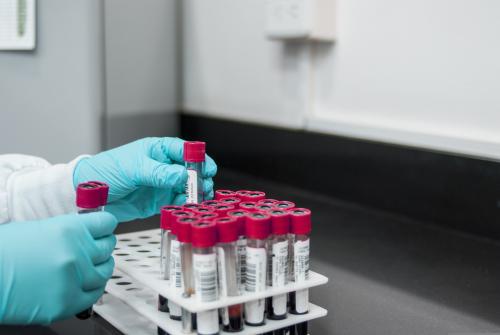
This discovery paves the way for a simple blood test that could allow doctors to detect blood vessel damage and assess a person’s risk of developing heart and kidney‑related diseases at an earlier stage than ever before. Together, these findings offer a completely new way to detect and monitor vascular disease through routine blood testing.
Dr Butler, the study’s first author, Consultant Senior Lecturer and Medical Research Council Clinician Scientist at the University of Bristol and Honorary Nephrology Consultant at NBT, explains:
“The health of our blood vessels is central to our overall health and monitoring blood vessel damage has been a routine part of healthcare for decades. However, a huge portion of the vascular system is currently inaccessible to doctors and scientists because the vessels are too small to be seen.
“Our results suggest that we can use changes occurring at the surface of red blood cells to identify microscopic blood vessel damage before other markers become detectable.
“Most excitingly, we can also rapidly detect when drugs are effective at restoring the blood vessel lining. These findings could transform our ability to spot and treat disease before it progresses to become potentially irreversible or life-threatening.”
Professor Simon Satchell, Professor of Renal and Vascular Medicine at the University of Bristol and the study’s last author, added:
“Our findings provide a powerful tool for identifying potential health issues at a much earlier stage. This discovery could pave the way for proactive, preventative healthcare, offering the possibility of addressing diseases before they develop.”
Dr David Crosby, chief research officer at Kidney Research UK added:
“We are delighted to hear the results of this research from Dr Butler, Professor Satchell and their team at the University of Bristol.
“Our cardiovascular health is closely linked to our kidney health. This novel method for assessing the health of our tiny, microscopic blood vessels is key to identifying damage happening in the early stages of kidney and heart disease. More research is needed, but this new method may give us a window of opportunity to detect disease and intervene early, and to save lives - we're excited to see how this progresses.”
The study was published in leading journal Nature Communications. It was directly funded by the Medical Research Council (MRC) and Kidney Research UK (KRUK). The British Heart Foundation (BHF) and Diabetes UK funded one or more of the co-authors.
Paper
‘Endothelial-erythrocyte glycocalyx exchange opens the door for ‘liquid biopsies’ of endothelial function’ by M Butler et al. in Nature Communications.