
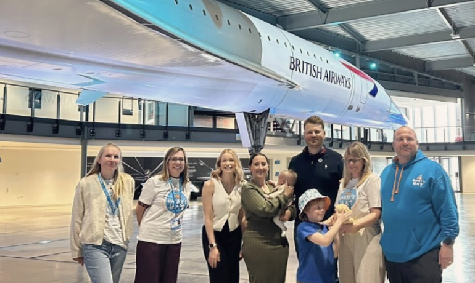
Teenagers living with hydrocephalus - a chronic neurological condition - took part in a pilot support event hosted by Bristol NHS Group to help prepare them for the transition from children’s to adult healthcare services.
Neurosurgical teams from University Hospitals Bristol and Weston NHS Foundation Trust (UHBW) and North Bristol NHS Trust (NBT) recently came together to run a dedicated session for young people with hydrocephalus, a condition caused by a build-up of fluid in the brain that can lead to increased pressure and potential damage.
Held at Aerospace Bristol, the event brought together clinicians from Bristol Royal Hospital for Children (BRHC) and Southmead Hospital to support and empower BRHC patients and their families as they prepare to move into adult services at Southmead over the coming years.
Clinicians from Bristol NHS Group were joined by members of the neurosurgical team at Derriford Hospital (part of University Hospitals Plymouth NHS Trust). Attendees heard from former patients who have successfully transitioned from children’s to adult services, who shared their insights and experiences to help guide the next generation of young people.
Molly Perham, Paediatric Neurosurgical Specialist Nurse at UHBW, said: “This was the first event of its kind for young people living with hydrocephalus and their families, designed to ease the transition from paediatric to adult services, and it was a tremendous success. We were delighted to have support from the adult teams at Southmead and Plymouth, alongside representatives from charities and shunt manufacturers.
“The day gave young people and their families the chance to deepen their understanding of hydrocephalus, learn what to expect from adult services, and discover the range of support available to them. They were also able to ask questions and connect with other families navigating similar experiences. I think everyone - professionals included - came away having learnt something new.”
Around 30 families attended the event, which was funded by Harry’s Hydrocephalus Awareness Trust (Harry’s HAT), the UK’s only charity focused solely on paediatric hydrocephalus and its impact on children and families.
Anonymised feedback from patients and families on the day include:
- “Relaxed atmosphere, excellent advice, particularly the clinical advice”
- “Lots of informative speakers and my son really enjoyed the activities”
- “An incredible day organised by incredible people. Thank you so much for organising it!”
Professor Steve Hams, Group Chief Nursing and Improvement Officer at Bristol NHS Group, said: “The success of this event highlights the importance of collaboration across Bristol NHS Group, our specialist teams and partner organisations in supporting young people with hydrocephalus. This is particularly important at the critical point when patients transition from paediatric to adult services, helping to ensure continuity of care and the best possible long-term outcomes.”
Vicki Hannay, Families Together Manager at Harry’s HAT, said: “The transition event was a tremendous success. It brought together teenagers living with hydrocephalus and their parents, alongside healthcare professionals, charities and shunt manufacturers.
“The event offered families the opportunity to learn what to expect during transition from paediatric care to adult care, ask questions and connect with other families. They also had the opportunity to explore the incredible venue. We plan to host more of these events in the future.”