Continuing Health Care Funding

Wide Off Off

NHS Continuing Health Care (CHC) is the name given to a package of care that is arranged and funded solely by the NHS for individuals outside of hospital who have ongoing health care needs. A person can receive CHC in various setting, including at home or care home.

Funding must be applied for by health care professionals following the correct processes and if awarded is reviewed periodically to see if a person still meets eligibility criteria.

Anyone assessed as having a certain level of care needs may receive NHS CHC funding however they must meet specific criteria. It is not dependent on a particular disease, diagnosis or condition. Sometimes assessments may be accelerated (fast tracked), if an urgent package of care is needed due to the patients rapidly deteriorating condition  so that care can be arranged as quickly as possible. The availability of practical care is dependent upon capacity and community services.

For further information and to download Continuing Health Care and NHS-Funded Nursing Care Public Information Booklet, please visit www.nhs.uk/chq/Pages/2392

Clinical Equipment Services (CES)

Wide Off On Services & Referral

Clinical Equipment Services (CES) provides a comprehensive medical equipment technical support service to North Bristol NHS Trust (NBT) and a number of community health organisations. 

This service is provided by a team of clinical technologists and technicians, specialising in various engineering fields related to reusable medical devices. The team is based within the Clinical Equipment Services (CES) department at the Brunel Building, Southmead Hospital, Bristol.

The department also runs a medical equipment library that holds commonly used medical devices for use by NBT equipment users.

The department maintains a Quality Management System based on the requirements of ISO 9001:2015. 

This ensures operations are carried out in a controlled, consistent, and professional manner, employing proven methods and competent staff who are fully aware of their responsibilities and expected contribution to the excellence of the service.

BSI logo


CES Management Team

  • Aggie Dimunge - CES Department Manager
  • Paul Derman - CES Deputy Manager and Medical Device Safety Officer
  • Gareth Lewis - Electronic Service Head
  • Craig Wheeler - Mechanical & Optical Service Head
  • Kevin Brooksby - Bed & Mattress Service Head
  • Lisa Smith - Clinical Equipment Training Coordinator
  • Emma Broom - Quality & Community Manager

Contact us

For more information about our department, please email cessupport@nbt.nhs.uk.

For repairs or service please call the Clinical Equipment Services reception telephone 0117 4146060 (Internal extension: 46060).

We are located in the Brunel Building, Southmead Hospital at Gate 10 on level 6.

Community Services

As well as providing support to North Bristol NHS Trust, we also offer services to other community locations.

The services we can offer include:

-    Acceptance checks on newly purchased medical devices.
-    Annual servicing/calibration checks on medical devices.
-    Repair service.

If you have a large number of items, then we can visit your location and carry out the checks onsite.

Alternatively, you can post your devices to us and we will carry out the work here in our workshop. 

Your items will then be couriered back to you or returned using our NHS internal post service.

Examples of the equipment we can check include:

  • Scales - adult and baby
  • T34 Palliative care syringe drivers
  • Manual and electric BP monitors
  • Thermometers
  • Pulse Oximeter

Need more information on community services?

If you would like more information on our services and costings, please email cescommunity@nbt.nhs.uk

Alternatively, please complete the Clinical Equipment Services Community Work Request Form and we will get back to you. 

Clinical

Stroke Service - For Clinicians

Wide Off On Services & Referral

The North Bristol NHS Trust stroke and TIA service is provided to both local residents and from the wider region.

Download:


For more information on TIA services locally and to make a referral visit the Remedy page.


Useful Links

National clinical guidelines for stroke - The third edition updated 2008 encompasses the whole of the stroke pathway from acute care through to longer-term rehabilitation and secondary prevention. It informs health professionals about what should be delivered to stroke patients and how this should be organised, with the aim of improving the quality of care delivered for everyone who has a stroke, regardless of age, gender, type of stroke, or location. The recommendations have been completely revised to include the most up-to-date evidence published since the last edition in 2004. Please visit www.rcplondon.ac.uk

National Institute of Clinical Excellence (NICE). Diagnosis and initial management of acute stroke and transient ischaemic attack (TIA).

The advice in the NICE guideline covers:

  • How healthcare professionals should recognise the symptoms of a stroke or transient ischaemic attack (TIA) and make a diagnosis quickly
  • When people should have a brain scan and other types of scan
  • Specialist care for people in the first 2 weeks after a stroke
  • Drug treatments for people who have had a stroke
  • Surgery for people who have had a stroke

For more information, visit www.nice.org.uk.

Contact Stroke & TIA Stroke

HITU Neuropsychology

Wide Off Off

The neuropsychologist will often assess thinking (cognitive) abilities. If difficulties are apparent they would then typically provide advice and instruction in how to make use of strategies and techniques for minimising the consequences of these difficulties.

The neuropsychologist will often assess the more emotional side of the consequences of brain injury as well as looking at any changes in behaviour that may have occurred. It is not uncommon for people to experience feelings of:

  • Unhappiness
  • Depression
  • Increases in feelings of tiredness and fatigue
  • Irritability

The neuropsychologist may provide psychotherapy to help with these symptoms.

The work of the neuropsychologist is undertaken through individual sessions with people, within group sessions and, frequently, in conjunction with other therapists within the rehabilitation team. We offer group based interventions for help with fatigue, memory and irritability / frustration problems following brain injury.

HITU Speech & Language Therapy

Wide Off Off

Our Speech & Language Therapists focus on minimising the impact of functional communication and swallowing difficulties one might experience following a brain injury.

Communication can be affected by having difficulties with:

  • Finding words,
  • Understanding what has been said,
  • Reading,
  • Writing,
  • Articulating / pronunciation,
  • Voice
  • Following a conversation,
  • Eye contact,
  • Saying things appropriately,
  • Organising what is said,
  • Understanding humour

Difficulty with functional communication can impact on independent living, inter-personal relationships with friends and/or family, consumer activities, academics, and/or work.

Sometimes people experience difficulty swallowing food and/or fluid following a brain injury. Coughing, choking, or taking longer to eat can greatly affect someone’s life.

Therapeutic intervention can occur individually or in a group, at HITU, home, or in the community.

HITU Occupational Therapy

Wide Off Off

Each patient is assessed as part of the overall assessment.

The initial assessment includes using:

  • The Canadian Occupational Performance Measure
  • The Chessington Occupational Therapy Neurological assessment Battery
  • A functional assessment carried out in the home environment.

Measurable goals are then planned in conjunction with the client and the interdisciplinary team.

Occupational Therapy at HITU may include:

  • Devising strategies to help with cognitive, perceptual and physical deficits in everyday life and supporting clients to implement these in their homes, workplace or in the community.
  • Worksite assessments, planning and implementing graded return to work programmes and regular monitoring.
  • Liaison with employers, job centres and other community agencies.
  • Investigation into voluntary work.
  • Introduction of community activities such as leisure or educational training.
  • Provision of equipment to enable independence at home
  • Upper limb rehabilitation
  • Group work.

HITU Physiotherapy

Wide Off Off

The Physiotherapy Team at HITU consists of 2 Physiotherapists.

Their role involves assessing clients with a wide range of physical difficulties as part of the overall interdisciplinary assessment.

From the assessment clients may be provided with an appropriate, client centred rehabilitation program based on measurable goals.

Physiotherapy sessions may take place at HITU, in local community facilities, for example leisure centres, or in the clients own home.

Respiratory Rapid Access Clinics

Wide Off Off

Respiratory "Hot" Clinic

Monday to Friday 10am-4pm in AEC. Seen same day or next day for patients threatening admission from GPs with respiratory problem. 

Access to this service is via a faxed referral form: [attachments]

Please complete all details in block capitals and provide as much information as possible on the reason for referral.

Referrals should be faxed to 0117 4149451. Referrals received by 12 noon where the patient is able to arrive before 1pm will be seen on the same day, otherwise they will be seen the next day. A Respiratory Consultant is available to discuss referrals or offer advice Monday to Friday 10am–5pm.

Please ensure the patient's contact telephone number is included in the referral form. We will contact them by phone to give them an appointment time.

Pleural Clinic

Monday to Friday 2pm-3pm on MDCU. Seen same or next day for patients with new effusions or known pleural disease threatening admission. 

Referrals should be discussed with the Pleural SpR on 07894 803088 then email the referral to pleural-referrals@nbt.nhs.uk 

2 Week Wait

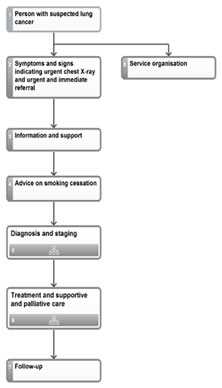
For patients with possible lung cancer.  

Referrals should be emailed to sarah.smith@nbt.nhs.uk and deborah.walton@nbt.nhs.uk  with patient details and give patient contact details of nurses.

Respiratory Hot Clinic Referral.doc

Respiratory Medicine - For Clinicians

Wide Off On Services & Referral Pulmonary Rehabilitation - For GPs

Referral Criteria for ARAS
Referrals accepted from the in-patient nursing and medical teams and via respiratory out-patients for patients attending HOT clinic (Please refer on ICE).

The patient must have / be:

  • Alert & orientated
  • Be purely a respiratory admission with COPD
  • Able to take their own medications or cope with their normal level of help
  • Satisfactory respiratory function
  • Good social support
  • Able to undertake their normal activities of daily living or have adequate support in place.

Respiratory Specialist Team
Referral options for in-patients received from nursing and medical teams via ICE.

  • Asthmatics
  • Home oxygen assessments
  • TB screening support, ie. Mantoux testing
  • Advice and support for complex respiratory patients
  • Inhaler device teaching and assessment
  • Nebuliser advice
  • Smoking cessation

Referral options for out-patients, received from Respiratory out-patients and other medical specialities. All new referrals received from primary care will be via the Respiratory consultants.

  • Asthma management & treatment
  • Home oxygen assessments
  • TB screening
  • Nebuliser assessments

Nurse led Clinics:

  • Monday am alternate weeks – ARAS follow-up
  • Tuesday pm – Asthma
  • Thursday am – Long term oxygen therapy (LTOT) assessments
  • Thursday pm – Support to the Pulmonary Fibrosis clinic
  • Friday am - Long term oxygen therapy (LTOT) assessment
  • Friday am – Asthma specialist treatment

Community Support
Patients receive support in their own homes under the following services. The Respiratory team work closely with primary care in providing long term support to patients through regular communication with GP’s, Community Matrons and community nursing teams along with other multidisciplinary services.

ARAS
Patients receiving home oxygen therapy – Home visits are offered when patients are commenced on long-term oxygen therapy (LTOT) and at annual follow-up for further support and monitoring. Patients receiving palliative oxygen therapy will be visited as needed but the majority of this support is provided in conjunction with primary care.
Patients receiving short burst oxygen therapy and generally only followed up by telephone except under exceptional circumstances.

Respiratory

Shoulder Post Operative Rehabilitation Guidelines for GPs & Health Professionals

Wide Off Off

These guidelines cover Mr Iain Packham, Mr Mark Crowther, Mr Neil Blewitt & Mr Phil Mc Cann

These guidelines cover the most common shoulder surgery undertaken:

  • Sub-acromial Decompression +/- ACJ excision
  • Rotator Cuff Repair – standard
  • Rotator Cuff Repair – complex
  • Shoulder Replacement (TSR, Hemi Arthroplasty, Humeral Head Resurfacing)
  • Reverse Geometry Total Shoulder Replacement
  • Anterior Shoulder stabilisation
  • SLAP repair
  • ACJ stabilisation
  • ORIF Clavicle Fracture

These guidelines form a staged rehabilitation programme. They are general guidelines and any specific instructions in the post operative notes must take precedence. They are not a substitute for sound clinical reasoning and good communication with the consultant team.

Please be aware that these guidelines have been updated June 2015 – ensure you are using the most recent version.

Download:[attachments]

If you have any queries with regards the patients please contact the Shoulder Physiotherapy Team at Therapies Department, Brunel building, Southmead Hospital or the appropriate consultant

Shoulder Service Post Operative Rehabilitation Guidelines.pdf