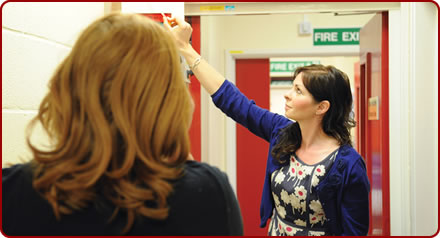
Safety Reporting Process
The process for safety reporting varies depending on whether or not the research is a ctIMP and on the procedures of the Sponsor of the research.
This general process should be followed in all research:
- RECORD the event may be recorded on the patient's medical notes, a Case Report Form (CRF) or on a Safety Reporting Form provided by the Sponsor.
- ASSESS an assessment should be undertaken by the Chief or Principal Investigator to evaluate seriousness, causality, intensity and expectedness.
- REPORT based on the conclusion from the previous step, the event should be reported on the CRF and/or SAE form as appropriate and within the timescales required.
There are a number of other issues to consider at each stage and the timescales depend on the nature of the event – for example a fatal Suspected Unexpected Serious Adverse Reactions (SUSAR) must be reported and signed by the PI within 24 hours to the Sponsor, followed up in writing within 48 hours, and reported to the MHRA and REC no later than 7 days after the Sponsor becomes aware of the reaction.
View Our Research

Explore the ground-breaking research currently taking place at North Bristol NHS Trust.
About Research & Development
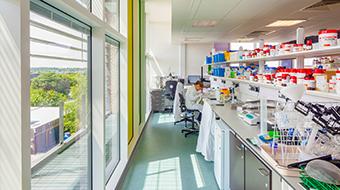
Find out more about our research and how we're working to improve patient care.
Contact Research
Research & Development
North Bristol NHS Trust
Level 3, Learning & Research building
Southmead Hospital
Westbury-on-Trym
Bristol, BS10 5NB
Telephone: 0117 4149330
Email: research@nbt.nhs.uk


 “Well over 20 years ago, I lost the sight in my left eye and after initially going to my local eye hospital I was passed on to a Neurologist. After a series of tests I was diagnosed with MS. I was only 24. This was a shock as I knew someone who had the disease and she used a wheelchair. My wife and I were expecting our first child so I was worried how my MS was going to affect me and my family. My family were all very supportive and together we found out more about the disease. Although I continued to work as an engineer for another 7 years, I became more and more tired; I now know this to be fatigue.
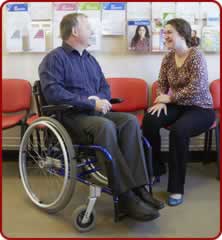 I eventually had to stop working as an engineer and so wanted to find something to keep me occupied. Five years ago I was introduced to a team of Neurological Consultant Doctors who told me of their idea to create an MS centre of excellence in Bristol, where people could receive treatment for the disease and be involved in new drug trials under a specialist team of MS doctors, nurses and a physiotherapist. They asked if I would help them raise funds for the unit and so became their Voluntary Fundraising Manager in 2007.
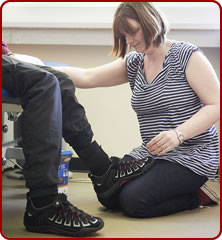 Disease modifying drugs are not a cure for MS, but they can reduce the frequency and severity of relapses. If you experience relapses these drugs may help, but they are not effective for primary progressive MS.
 Relapsing remitting MS is the most common type of MS, affecting around 85 per cent of those diagnosed. It means that symptoms appear (a relapse), and then fade away, either partially or completely.
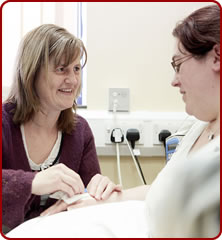 It is not uncommon for a diagnosis to take several months, and frustratingly it can take even longer. A range of other possible causes need to be explored and many different tests need to be carried out.