Contact Maternity Services

Wide Off Off

For general advice about your pregnancy, your baby or your appointments please contact your Midwifery Team. Monday to Friday calls will be dealt with within 48 hours. All telephone numbers, including emergency phone numbers can be found in the Hospital Contacts section of your Badger Notes. 
Remember; you can get general health advice from your GP service too.

To contact a midwife to book for antenatal care visit www.nbt.nhs.uk/anb or leave a message on 0117 4146743

Antenatal Clinic (Appointments)
Telephone: 0117 4146924

Antenatal Clinic Midwives (Monday - Friday)

Telephone: 0117 4146929

Gestational Diabetic Team 

Telephone: 0117 4141072

Percy Phillips Ward (Postnatal)
Telephone: 0117 4146821 or 0117 4146822

Transitional Care Ward 

Telephone: 01174145730

Maternity Triage Line

Telephone: 0117 414 6900

The Maternity Triage Line is available 24/7, 365 days a year for any urgent concerns for all pregnant and birthing people from 20 weeks pregnant through to 6 weeks postnatal, including if you are in labour. This replaces any numbers that were in use before 27 January 2026.

For all non-urgent and general enquiries, please contact your community midwife or relative department (eg Antenatal Clinic).

If you believe your concern to be an emergency , please dial emergency services.

Southmead Hospital Switchboard

Telephone0117 9505050


Maternity Help & Support Groups

Wide Off Off

Your maternity notes (yellow book) contains some helpful support and information.

1 Big Database - family information at your fingertips www.1bigdatabase.org.uk

AIMS - Association for Improvements in the Maternity Services www.aims.org.uk

Anxiety UK www.anxietyuk.org.uk

ARC - Antenatal Results and Choices www.arc-uk.org

Association of breastfeeding mothers www.abm.me.uk

Baby Bounce and Rhyme and Storytime Sessions www.bristol.gov.uk

Baby Friendly Initiative (BFI) www.babyfriendly.org.uk

Birth to Five www.publichealth.hscni.net

Bliss for baby’s born premature or sick www.bliss.org.uk

Childline www.childline.org.uk

Citizens Advice Bureau telephone www.citizensadvice.org.uk

Depression Alliance www.depressionalliance.org

La Leche League (Breastfeeding) www.laleche.org.uk

Miscarriage Association www.miscarriageassociation.org.uk

Money Advice Service www.moneyadviceservice.org.uk

Mothers for Mothers Postnatal depression support group for Bristol, North Somerset, S.Glos. www.mothersformothers.co.uk

National Breastfeeding Helpline helpline.org.uk

National Childbirth Trust www.nct.org.uk

National Institute for Clinical Excellence www.nice.org.uk

NHS www.nhs.uk

NHS Pregnancy & Smoking www.nhs.uk/smokefree/why-quit/smoking-in-pregnancy

Pelvic Partnership www.pelvicpartnership.org.uk

Positive About Down Syndrome www.positiveaboutdownsyndrome.co.uk

Sands www.uk-sands.org

TAMBA (Twins and Multiple Birth Association) www.tamba.org.uk

The Association for Post Natal Illness (APNI) www.apni.org

The Perinatal Institute www.preg.info

Population Screening Programmes www.gov.uk/topic/population-screening-programmes

Women's Aid (domestic violence) www.nationaldomesticviolencehelpline.org.uk

Living well Courses

Wide Off Off

The self-management programme is a course of 5 to 6 half day sessions that encourages participants to address the whole range of challenges they face during their recuperation. Patients are encouraged to attend the course as part of their routine follow up care.

It covers:

  • managing fatigue
  • dealing with condition-specific problems (e.g. erectile problems, lymphoedema)
  • stress management
  • combating depressive reactions
  • sign-posting sources of information and support

The courses employ goal-setting to promote behaviour change and confidence-building.

Participants construct a written self-care plan over the duration of the course. 

Self-management programmes are run by clinical psychologists, Cancer specialist nurses and patient-tutors who have completed training for the role of course tutor.

Living Well Events

Wide Off Off

All cancer services now run “Living Well” events for patients affected by cancer. 

Following cancer treatment patients are encouraged to attend a half education and information group session run by a range of health care professionals.

The events provide an opportunity for patients and/or carers to receive information and learn more about important aspects of caring for themselves, including information about:

  • health and wellbeing
  • recovery and rehabilitation
  • education in self-management
  • signs and symptoms of recurrence
  • reducing risk factors
  • managing side effects of disease and treatment
  • diet and exercise
  • emotional wellbeing
  • anxiety and stress management
  • financial advice

For more information visit www.macmillan.org.uk

The Southwest Neonatal Network Donor Milk Bank

Wide Off Off

The Southwest Neonatal Network Donor Milk Bank was established in November 2011 at Southmead Hospital in Bristol. We are one of 15 UK milk banks and the only one in the South West.

Our aim is to provide safe, screened donor breast milk for all babies who need it within the South West Neonatal Network. The Southwest Neonatal Network Donor Milk Bank provides about 100 bottles of milk to 10 units around the South West and beyond each month.

Why do we need a milk bank?

For premature and vulnerable babies donor breast milk is the next best nutrition if a mother’s own milk is unavailable. It offers specific benefits for these babies:

  • Protection from infection
  • Protection from necrotising enterocolitis
  • Easier to digest

How does it work?

Frozen breast milk is collected from a donor’s home regularly and is delivered to the milk bank to be processed. After pasteurization, donor breast milk is distributed to neonatal units around the south west to be given to babies who may need it.

Being a milk donor

Breast milk donors exclusively breastfeed their own babies. We can accept donations of their excess milk from when their own baby is at least 6 weeks old and until they are about 6 months of age.

Mothers who are interested in donating are screened (in a similar way to blood donation screening) to ensure their milk is safe to be given to premature and sick babies. This process involves a blood test, a visit to the hospital with their baby to meet a member of the milk bank team and the completion of a short lifestyle and medical history questionnaire. If you are interested please contact the Milk Bank on milk.bank@nbt.nhs.uk 
For further information on donor milk please visit the UKAMB website www.ukamb.org

Debbie with her daughter Abigail
Donor Story

Our daughter, Abigail, was born at 25 weeks gestation weighing just 550g. After the initial shock of giving birth so early, feeding Abigail my expressed breast milk became a way that I could still contribute to my daughter's well-being despite her being inside a plastic box and not being able to hold her. It was amazing to hear that I could still produce breast milk and feed it to her through a tube despite such an early birth.

Yet at 550g, the amounts of feed she could take were only a very small portion of what I was able to produce. After filling up my home freezer with breast milk one of the NICU nurses suggested I consider donating milk to the milk bank. The process of becoming a donor was easy - just a bit of paperwork and a blood test. I then arranged for collection of the milk by Mike on behalf of the milk bank. Mike came to the house and even gave me a few lifts into the hospital as well at the same time - a very practical solution to an oversupply of milk. But the best thing was the feeling I got when I first saw someone's baby being fed donor breast milk (the milk had a different coloured lid indicating donor milk). I obviously didn't know if it was mine or not, but seeing another baby benefit made me feel that some good had come from my own situation.

Our daughter is now doing well and I like to think that the benefits of having fed her breast milk for the first eight months of her life have put her in good stead for the future. I hope that the donor milk has done the same for other babies.

Postnatal Care in the Community

Wide Off Off

When will I be seen by the Community Midwifery Team?

When you come home from hospital with your baby a midwife will visit you the next day to assess and plan your postnatal care.

We are unable to give you a time as we do not know how many visits we will have or where they are. If you have not been seen by a midwife by 3pm please call the Hospital where you birthed and they will contact a Midwife for you. 

Your next appointment is usually day three - four to weight the baby and then on day five - seven to perform the neonatal screening test if you have consented to this procedure.

These appointments are held in a clinic and will be performed by a Maternity Care Assistant. You will be asked to come to a local clinic if you and your baby are well.

Your discharge appointment with the midwife will be between days ten - 14 and ideally at your own Health Centre. Along with yourself and your baby, please bring your maternity notes (yellow book) and your baby’s Child Health Record red book to every appointment.

If for any medical reason you cannot attend the clinics please speak to a member of the midwifery team.

Your plan of care

1st visit - Midwife usually from your team.

Day three - four - Maternity Care Assistant from your team to weigh baby.

Day five - eight - Maternity Care Assistant from your team to perform the neonatal screening test with your consent.

Day ten - 14 - Midwife discharge appointment ideally at the place where you have been seeing your Midwife antenatally with a member from your team.

If you have any baby weighing issues or breastfeeding problems we may ask you to attend a clinic or breastfeeding support group between 9am and 5pm Monday to Friday. On a Saturday and Sunday some GP surgeries are closed so we may ask you to come to Southmead Hospital or Cossham Birth Centre.

For more information on health visiting visit www.sirona-cic.org.uk

If you are not going to be at home for us to visit you please phone the ward you have been discharged from or phone the number on your red sticker.

Do I need a postnatal GP appointment?

You will need to make an appointment with your GP for a check-up for you and your baby at six-eight weeks following the birth. In the event of some complications, you or your baby may also have a follow-up appointment with a doctor at the maternity unit; this will be sent to you in the post.

You will also need to register your baby as a patient with your GP practice. To do this you will need to have your baby’s NHS number which is issued following the birth and can be found in your baby’s Child Health Record red book.

Early Inflammatory Arthritis (EIA)

Wide Off Off

We are developing our EIA service in line with NICE and BSR guidelines and around our patients’ needs. 

All referrals are triaged by the consultants and we aim to see suspected early inflammatory arthritis cases within 3 weeks from receipt of referral.  Referrals should be submitted with a completed proforma. 

Please refer patients with suspected persistent joint inflammation of 4 weeks or more AND any one of the following:

  1. Swelling of 3 or more joints
  2. Swelling of the small joints of hands or feet
  3. Positive MCPJ or MTPJ “Squeeze test” (i.e. pain produced by squeezing across the metacarpophalangeal/etatarsophalangeal joints)
  4. Early morning joint stiffness (EMS) >30mins

Please note the diagnosis of Early Inflammatory Arthritis is not excluded by normal inflammatory markers and / or a negative rheumatoid factor and/or normal Xrays.

We aim to make a diagnosis and start disease-modifying drugs within 6 weeks from time of referral or discharge patients back if not EIA.

People diagnosed with EIA have regular clinical reviews by the multidisciplinary team for education, self-management, monitoring of disease activity, therapeutic benefit and treatment safety.

Referrals will only be accepted with a completed Referral pathway to the Early Inflammatory Arthritis Service (EIA Service) - 3 week wait attached to the eReferral.


Patients not meeting these criteria should be referred to general rheumatology clinics.

Please refrain from using steroids until the patient has been seen in clinic as this makes assessment very difficult.

Classification of Adverse Events

Wide Off Off
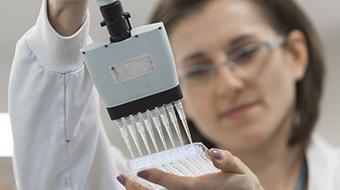
There are five main levels of adverse events to be aware of when running any research study at North Bristol NHS Trust.

  • Adverse Events (AEs) are any unfavourable and unintended signs, including abnormal laboratory results, symptoms or a disease associated with treatment. These must always be recorded on a Case Report Form (CRF) and in the patient's medical notes unless the protocol states otherwise.
  • Adverse Reactions (ARs) are adverse events but causally related to investigational medicinal products.
  • Serious Adverse Events (SAEs) are defined as any untoward medical occurrence(s) that at any dose results in death, hospitalisation or prolongation of existing hospitalisation, persistent or significant disability/incapacity or a congenital anomaly or birth defect. These events must be reported immediately to the sponsor. 
  • Suspected Serious Adverse reactions (SSARs) are any ARs considered consistent with information available about an Investigational medicinal Product (IMP). They must be reviewed at regular intervals to see if the profile of any IMP has changed and a record made of this.
  • Suspected Unexpected Serious Adverse Reactions (SUSARs) are any events suspected to be caused by an IMP, but which are not consistent with information about the IMP (these are the most serious of events and are subject to expedited reporting procedures).

View Our Research

Doctor conducting research at NBT

Explore the ground-breaking research currently taking place at North Bristol NHS Trust.

About Research & Development

NBT Researcher

Find out more about our research and how we're working to improve patient care.

Contact Research

Research & Development
North Bristol NHS Trust
Level 3, Learning & Research building
Southmead Hospital
Westbury-on-Trym
Bristol, BS10 5NB

Telephone: 0117 4149330
Email: research@nbt.nhs.uk
Informed Assent

Wide Off Off

When a clinical study involves emergency treatment or incapacitated participants, it is possible to gain consent where:

  • A participant meets the emergency conditions and is obviously in a life-threatening position
  • Nothing further can be accomplished with currently available treatment.
  • There is a fair possibility that the life-threatening risk to the participant can be avoided if the investigational device or medicinal product is used.
  • Anticipated benefits outweigh the risks of using the investigational device or clinical trial of an investigational medicinal product (ctIMP).
  • If a legal representative cannot be easily reached and informed.

Once the participant has regained consciousness, or as soon as they are able to understand, the research team should explain the study to the participant and allow them time to consider whether they wish to continue within it. This process must be clearly documented in the participant’s medical notes.

View Our Research

Doctor conducting research at NBT

Explore the ground-breaking research currently taking place at North Bristol NHS Trust.

About Research & Development

NBT Researcher

Find out more about our research and how we're working to improve patient care.

Contact Research

Research & Development
North Bristol NHS Trust
Level 3, Learning & Research building
Southmead Hospital
Westbury-on-Trym
Bristol, BS10 5NB

Telephone: 0117 4149330
Email: research@nbt.nhs.uk