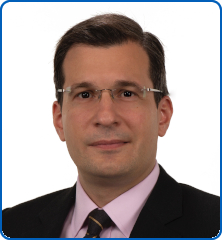
Dr Shakeeb Khan - Renal
GMC Number: 6067784
Year of first qualification: 2002, Aligarh, India
Specialty: Renal transplant, vascular access and general surgery
Clinical interests: Adult and paediatric renal transplants, hernia surgery
GMC Number: 6067784
Year of first qualification: 2002, Aligarh, India
Specialty: Renal transplant, vascular access and general surgery
Clinical interests: Adult and paediatric renal transplants, hernia surgery
Members of the network are all SLTs with a track record in research, clinical work and/or teaching in the field of child speech disorder. They are drawn from a variety of HEIs and clinical settings in the UK and Ireland and work with different specialist clinical populations. The group also has representation from RCSLT. The network has a maximum of 15 individuals at any one time.
On the CSDRN pages, you will find useful information on current and completed research, guidelines relating to management and research priorities in child speech disorder.
Silke Frike - University of Sheffield
We are looking for people to volunteer their time to participate in a project exploring how different brain conditions affect personality and behaviour.
We know that changes to personality and behaviour are common in different conditions affecting the nervous system. Studying these changes can help us understand more about diseases of the nervous system.
The study involves having pen and paper tests and filling in questionnaires. We will also ask if you can have an MRI brain scan. If you can't have an MRI scan (because of metal in your body or because you don't want to for any reason) then you may still be able to take part in the study, and do the tests only.
The tests are done at Southmead Hospital and CRIC Bristol on St Michael's Hill. We can help with travel expenses if needed.
We are looking for volunteers aged 50 or older who:
For more information, please contact:
Carlos Muñoz
Telephone: 0117 414 8238
Email: carlos.munoz@bristol.ac.uk or Research.Volunteer@nbt.nhs.uk
Our current study examines the role of a brain chemical called dopamine in storing memories overnight. Dopamine is commonly known as the 'reward chemical', but it also affects memory formation and storage, although the exact roles it plays are still being researched. We aim to see how dopamine during sleep affects the storage of different types of memory, and to see whether dopamine could be used to help treat memory problems.
We are looking for volunteers who:
If you are willing to take part you will be invited to four visits at the Clinical Research and Imaging Centre (CRIC Bristol) on St Michael’s Hill in Bristol. The first visit is a screening visit during which we ask you about your health to make sure it is safe for you to take part. You will also have a chance to get to know the research facility during this visit. The three other visits are overnight visits during which you will learn memory tasks. Before going to sleep, you will take a single dose of a medication or a placebo, and then your brainwaves will be recorded during sleep using sensors placed on your scalp. On one of the visits we will take a magnetic resonance image (MRI) of your brain. We also ask you to keep a sleep diary for a week before each overnight visit (3 weeks in total).
All our volunteers are given single doses of placebo and two types of medication, which both increase dopamine activity in the brain. We have a lot of experience in prescribing these medications; they are widely used and known to be well-tolerated.
We do not pay our volunteers, but we do cover all expenses. Does this sound like something you would like to do? If so, please get in touch with Hanna Isotalus or Dr Coulthard to find out more.
Telephone: 0117 414 8238
Email: elizabeth.coulthard@bristol.ac.uk or Hanna.isotalus@bristol.ac.uk
Sadly, despite our best efforts, not all our patients on Intensive Care will survive. We realise this is an extremely distressing time for relatives and friends and we want to assure you that we will do all we can to help if your loved one passes away.
In this situation, we can offer a memory box in which any items of personal significance, such as cards and locks of hair can be kept. We can also help with other keepsakes such as a handprint if this is something that you would like.
We will make sure you are given information for what happens next, with a bereavement leaflet containing contact details for the hospital bereavement service.
In addition, we aim to call you within a few days to offer our support. At this time, we will ask if you would like any further input from the wider medical and nursing team responsible for the care of your loved one. If you need to call us before this, please do not hesitate to contact us via the ICU Reception on 0117 414 1400.
Towards the end of the year, we hold an annual ICU memorial service to celebrate the lives of those that have died on our ICU. This is held in a venue close to the hospital, usually in December. All friends and family are very welcome to attend.
GMC Number: 6109278
Specialty: Upper Gastrointestinal, Bariatric and Metabolic Surgery
Secretary: Kate Hewings
Telephone: 0117 414 0837
Clinical interests: Surgical treatment of obesity and diabetes as part of multi-modal care. Laparoscopic (keyhole) gastrointestinal surgery, management of gallstone disease and gastro-oesophageal reflux.
Research interests: Outcomes of bariatric/metabolic surgery beyond weight loss with a focus on obesity associated morbidity and cardiovascular risk. Identification of how these operations work or how bariatric/metabolic surgery changes the way the gut talks to the brain.
Dimitri Pournaras graduated from the Aristotle University of Thessaloniki, Greece and undertook all his postgraduate training in the UK. He was awarded Research Fellowship by the Royal College of Surgeons of England to conduct research on obesity, diabetes and metabolic surgery. He completed his PhD in the Department of Investigative Medicine, Hammersmith Hospital, Imperial College London and then trained in all aspects of laparoscopic oesophagogastric surgery in Cambridge and Norwich. Following a Bariatric and Metabolic Surgery Fellowship approved by the Royal College of Surgeons, he was appointed as a Consultant in Bristol where he works as part of a multidisciplinary team. He is on the editorial board of journals Obesity Surgery and Clinical Obesity and has authored more than 50 peer reviewed publications, including articles in the Lancet, the Annals of Surgery, the British Journal of Surgery and the British Medical Journal. He delivers more than 10 invited international lectures every year.
A vital branch of our Acute Care Department, the Intensive Care Clinical Research Team deliver national and international multi-centre studies in Intensive Care Medicine and related specialities, working to advance the care that we give to our patients.
The team also work closely with colleagues across the Trust and beyond to develop new and innovative research ideas that test new treatments especially in the fields of major trauma and neurosciences.
Please speak to the person treating you to find out if there is a research study that may be able to help you.
GuARDS is a research study running in Intensive Care Units (ICU) across the UK.
Patients with Acute Respiratory Distress Syndrome (ARDS) and the treatment being tested is a safe drug called dexamethasone alongside the standard ICU care.
PI: Dr Matt Thomas
Planned end date: 31st July 2027
Local ref: 5505
SepTiC is the name of a research trial which is looking at treatments for sepsis. The trial aims to find out what are the best treatments for sepsis.
We are testing three different things in this study:
Patients who have sepsis due to a serious infection need treatment as soon as possible. The treatment usually starts with drugs such as antibiotics to help fight the infection. Sometimes these drugs are used for longer than needed, which can cause side effects that can be harmful to patients. This might also make infections more difficult to treat in the future as it risks bugs (bacteria and other microorganisms) becoming used to and not being killed by antibiotics. Also, not all patients who are at first thought to have sepsis (and receive antibiotics) have an infection, so they may not have required antibiotic treatment at all. So, it is really important that we find out which patient needs antibiotics for an infection, who does not need them and if we can stop them, as soon as possible.
2. Fluid Trial
Giving fluids, through tubing in the arm known as a ‘drip’, is standard practice in treating sepsis, but there is no clear guide on how much fluid is enough or too much, and so a build-up of fluid in the body can occur which may be harmful. We will test how much fluid should be given and whether to remove any build-up of extra fluid.
For patients in this group, depending on their condition, we will give as little fluid as possible and, when safe, will treat any build-up of fluid which has occurred using medications called diuretics. If the patient is already receiving kidney dialysis, we will use this to remove excess fluid instead of diuretic medications.
3. GM-CSF Trial
GM-CSF is the short name for granulocyte-macrophage colony-stimulating factor. This is approved in the USA by the FDA as type of protein that helps to make more white blood cells to help the immune system fight infection. The GM-CSF used in this trial is called Sargramostim.
This treatment will only be given to patients who need support for their breathing or other important organs. For patients in this group, an injection under the skin of 250-500mcg Sargramostim is given once a day for up to 8 days. To help test if this does help patients, they will be compared with other patients who will have a sugar solution made to look the same as the drug. This is also given once a day for 8 days. This is known as a ‘placebo’.
PI: Dr Matt Thomas
Planned end date: 30th April 2027
Local ref: 5688
We wish to investigate whether giving deceased organ donors a single dose of the commonly prescribed drug, Simvastatin, is beneficial for transplant recipients.
All donated organs have suffered some damage. As the brain dies chemicals are released which cause an “inflammation” of the body. Measurements of this “inflammation” link to how well the organs function after transplant. We know that statins have many benefits, including dampening down inflammation in the body and individual organs.
Doctors in Finland linked this information in a clinical study. Organ donors, donating their heart, were randomised to receive a statin. The recipients who received a heart from a donor who had statins had less heart damage. This was a small study but there was a small benefit for lung and liver recipients and no disadvantage in receiving any organ from a donor who had received the drug.
A significant number of organs offered for transplant are not used; for the heart, this figure is about 75%. The reason for being so selective is that poor function of the donor heart in the recipient is the most common cause of death after a transplant. Any step in the donor which might improve the transplanted heart, or other organ, could have a major benefit to the recipient.
We plan to enrol 650 adult brain dead donors across the UK per year in a randomised controlled trial. Half the donors will receive Simvastatin in addition to standard care, compared to standard care only. The drug will be given after the donor family have consented to both organ donation and involvement in research.
Half of the recipients will receive a heart from a donor given the drug. We will follow the results of transplant, using data already collected in the national transplant database. No extra data or blood samples will be needed.
Project Details
Principal Investigator: TBC
Planned End Date: TBC
Local Ref: 4145
Randomised trial of the clinical and cost effectiveness of a supraglottic airway device versus intubation during in-hospital cardiac arrest.
A multi-centre, open label, pragmatic, individually randomised, parallel group, superiority trial and economic evaluation to determine the clinical and cost effectiveness of a supraglottic airway versus tracheal intubation during in-hospital cardiac arrest. The trial will include an internal pilot to confirm feasibility.
Chief Investigator – Professor Jonathan Benger
Principal Investigator – Dr Jasmeet Soar
Traumatic brain injury (TBI) is a leading cause of death and long-term disability. Approximately half of those with severe traumatic brain injury will be severely disabled or dead 6 months post injury. Given the young age of many patients with severe TBI, the economic and more importantly the social cost to the community is very high.
Management of patients with brain injuries focusses on the prevention of “secondary” brain injury. This can result from complications of the injury such as insufficient blood flow, or insufficient oxygen in the brain. The mainstay of preventing secondary injury has been the management of patients in the intensive care unit (ICU), with treatment aimed at minimising any rise in intracranial pressure (ICP) and maintaining blood flow. However, rises in ICP may be a late indicator of secondary injury
The brain depends on an uninterrupted supply of oxygen and monitoring the oxygen levels in brain tissue may provide a more useful marker of secondary injury. Several small trials have provided some promising results to support the use of monitoring and optimising brain tissue oxygenation to minimise secondary brain injury.
There have been no robust clinical trials to provide evidence to support the use of this technology. Clinicians are uncertain about the benefit of monitoring brain tissue oxygen levels. This important question would be answered by a trial testing this strategy compared to the standard management of monitoring ICP alone.
The BONANZA trial will enrol 860 patients who have suffered a severe TBI and require ICP monitoring. Each patient will be randomised to either a brain tissue oxygen monitoring strategy (including ICP monitoring) or the standard strategy of ICP monitoring alone. Functional and neurological recovery will be assessed at 6 months post injury to see if there is a difference between both groups of patients.
PI: Dr Matt Thomas
Planned end date: 1st December 2026
Local ref: 5381
GENOMICC - Genetics Of Mortality In Critical Care
The study will work within the International Severe Acute Respiratory Infection Consortium and International Forum of Acute Care Trialists, two global initiatives , to establish a prospective DNA resource for hypothesis-testing and genome-wide discovery of host genetic variants underlying susceptibility to severe infection, and outcome from life-threatening systemic injury. We will: Obtain a single DNA sample from patients with:
And;
Obtain DNA from the parents of patients with extreme susceptibility to eligible syndromes (those under 40 and free from significant comorbidity).
Obtain DNA samples, where possible, from appropriate comparison or control groups.
Combine existing DNA resources in a virtual collaborative network to enable rapid hypothesis-testing of candidate variants.
Establish and continually replenish a small cohort of individuals with known profound susceptibility to specific pathogens, who will be invited to provide repeat samples for in vitro studies of cellular responses to relevant stimuli.
Where appropriate and implementable, allow return of clinical relevant information to the NHS regarding participants.
Allow lifetime linkage (and beyond) to healthcare and other relevant data (including registries, healthcare records, research datasets, and lifestyle and other data).
Chief Investigator – Professor JK Baillie
Principal Investigator – Dr Matt Thomas
MARCH - Mucoactives in Acute Respiratory failure: Carbocisteine and Hypertonic saline.
When patients are critically ill, one of the main complications is called ‘acute respitatory failure’. This is when the patient’s illness causes their lungs to fail to work. Patients need to be admitted to the Intensive Care Unit and often need to have a breathing machine, or ventilator, to help them breathe and ensure that enough oxygen gets into their blood.
However, one problem that can occur as a result of being on a ventilator, is difficulty clearing secretions from the lungs. This can happen for a number of reasons. Lack of the body’s own natural moisture in the airways can make the secretions become very thick and dry. The breathing tube from the ventilator can also make coughing up secretions more difficult. Patients may also feel too sleepy from their medication to cough by themselves. Not being able to clear secretions from the lungs can make breathing harder, and this may result in developing a lung infection.
To reduce the problem of thick secretions, the air coming from the ventilator can have moisture added to it. Other treatments can include using a suction tube to remove secretions via the breathing tube. Physiotherapists may also use techniques to help clear secretions. In some cases, medications called ‘mucoactives’ may be prescribed for patients. However, even though mucoactive medications are commonly used in patients with lung failure in the ICU, we do not know if these medications really help patients when they have thick secretions that are difficult to clear.
The aim of this study is to determine whether use of mucoactives in critically ill patients with acute respiratory failure improves outcomes and is cost effective, compared to usual airway clearance management. The study objectives are to conduct a large, UK, multi-centre, pragmatic, randomised controlled trial to:
Chief Investigator – Professor Danny McAuley
Principal Investigator – Dr Matt Thomas
Become one of the thousands of people taking part in research every day within the NHS.
Find out more about our research and how we're working to improve patient care.
Research & Development
North Bristol NHS Trust
Level 3, Learning & Research building
Southmead Hospital
Westbury-on-Trym
Bristol, BS10 5NB
Telephone: 0117 4149330
Email: research@nbt.nhs.uk
Southmead Hospital ICU has a well-established FICE (Focused Intensive Care Echocardiography) service, with 10 FICE-accredited consultants and 6 FICE mentors.
We hold quarterly FICE governance and echocardiography update meetings, which are open to all who are interested and we have previously hosted a FICE training course. We actively encourage ICM trainees to participate in FICE training during their time with us and have helped a number of trainees to achieve FICE accreditation.
FICE scans performed on the unit are archived to our hospital PACS system and we are well-supported by the echocardiography department in Southmead Hospital.
New Meeting topic 18/12/2017: ‘Pearls and pitfalls in Intensive Care Echocardiography’
FICE CPD Meeting Topics 2018:
FICE CPD Meeting Topics 2017:
Southmead ICU is a part of the Southwest Critical Care Network.
The South West Critical Care Network (started in 2014) aims to promote excellence of care for critically ill patients; support critical care providers and commissioners to ensure an integrated approach to the planning and delivery of critical care, and to support continual quality improvements.
Patients on our Intensive Care Unit are cared for by a highly skilled, specialist multi-disciplinary team of over 300 staff. This includes 27 Intensive Care Consultants, resident doctors, advanced practitioners, specialty medical and surgical teams, nursing staff, physiotherapists, dieticians, speech and language therapists and pharmacists.