
Dr Ella Chaudhuri - Acute Medicine
Regular
Off
On
A-Z of Consultants
Chaudhuri
GMC Number: 6120309
Year of first qualification: 2005, University of Bristol
Specialty: Acute and General Internal Medicine
Clinical interests: Leadership and management, same day emergency care, education in acute and general medicine
Secretary: Lisa Williams
Telephone number: 0117 414 1141
Dr Ella Chaudhuri has been a Consultant Physician at North Bristol NHS Trust since August 2015. She is currently the clinical lead for acute medicine. Together with her colleagues, she provides care for patients referred from primary care or the emergency department in need of a specialist medical review. She also provides care for inpatients on the medical short stay unit and enhance care unit.
Dr Chaudhuri has an interest in service design and delivery in Acute Medicine and development of Acute and Ambulatory Care Pathways to improve patient care and experience.
She also holds a postgraduate certificate in Medical Education and has a special interest in postgraduate training in General Internal Medicine.
She is a member of the Royal College of Physicians and Society for Acute Medicine.
Dr Dragos Dragnea - Anaesthetics
Family History Clinic
Regular
Off
Off
The Family History Clinic is run by Dr. Alice Moody. You must seek a direct referral from your GP. After this, the team will send you a questionnaire about your family history and general health.
It is really important for you to complete this as fully as possible, as the information you provide is integral to your risk being calculated accurately. We ask you that please return within 8 weeks. Please use this opportunity to ask your family members to help you answer any of these questions.
Following review of this, if there is a need, we will make you an appointment at the family history clinic.
The appointment is virtual, using a simple video link. There is no need to set up an account. If your preference is for a face-to-face appointment, this can be arranged.
During the appointment, the questionnaire is reviewed, and any further or missing information is gathered, and a risk assessment made. The risk assessment is calculated, using various tools and guidelines.
These results are then explained, and a recommendation made based on the NICE guidelines.
Recommendations might be that:
- You are too young to start mammograms yet.
- You should start annual mammography before age 50.
- You should have routine 3 yearly breast screening mammograms from age 50 - 70.
- You may need MRI screening (recommended for some very high risk patients).
- A referral for genetic testing is recommended.
- A discussion about taking risk reducing medication in our co-clinic.
Family History Clinic Team
Our team is made up of:
Dr Alice Moody, Specialist Doctor. Family History Lead, High Risk lead.
Dr Claire Asby, Trainee Breast Clinician.
Dr Laura Coates, Trainee Breast Clinician.
Dr Sarah Agombar, Trainee Breast Clinician.
Contact Bristol Breast Care
Bristol Breast Care Centre
Beaufort House
Southmead Hospital
Westbury-on-Trym
Bristol
BS10 5NB
Telephone*: 0117 4147000 or email familyhistorybreastcare@nbt.nhs.uk.
* 9am - 5pm Monday to Thursday, Friday 9am - 4pm
BBCC Fundraising
Regular
Off
Off
The Bristol Breast Care Centre is supported by Southmead Hospital Charity’s dedicated breast care fund.
Working closely with clinical teams, therapeutic support staff and the patient community, Southmead Hospital Charity identifies and raises funds for projects that improve facilities and the treatment environment for patients, their carers and families.
We enable projects that are over and above the scope of the NHS and just wouldn't be possible without the endeavours and backing of our patients, staff, local businesses and communities.
The Bristol Breast Care Centre Appeal has already made a vital contribution to the wonderful new facilities in the centre. But we still need your help to continue making the centre the very best it can be for patients.
It’s easy to donate
- You can donate online.
- By cheque - Please make cheques payable to Bristol Breast Care Appeal and send to Bristol Breast Care Appeal, Southmead Hospital Charity, Southmead Hospital, Bristol BS10 5NB
- Or why not hold a fundraising event? There are many ways you can fundraise for Southmead Hospital Charity and we’d love to hear from you. You can contact us at hello@southmeadhospitalcharity.org.uk or telephone 0117 414 0170.
To find our mote about Southmead Hospital Chairty visit www.southmeadhospitalcharity.org.uk

Workforce Race Equality Standard
Regular
Off
Off
Implementing the Workforce Race Equality Standard (WRES) is a requirement for NHS commissioners and NHS healthcare providers including independent organisations, through the NHS standard contract. Introduced in the NHS on 1 April 2015, the WRES is a set of metrics that requires all NHS providers to demonstrate progress against nine indicators, including a specific indicator to address the low numbers of ethnic minority board members across the organisation.
For more information on the NHS Workforce Race Equality Standard visit www.england.nhs.uk.
2023
2020/2021
The actions plans are still in draft format as we are still working with our relevant staff networks and other stakeholders to finalise them in due course
NBT WRES 2020-21 Data Website.pdf350.05 KB
Download:
BOMSS Nutrition & Monitoring Guidelines
Regular
Off
Off
BOMSS: GP Guidance: Management of nutrition following bariatric surgery August 2014
|
Vitamin and Mineral recommendation |
Examples |
|
|---|---|---|
|
Multivitamin and Mineral supplement |
2 x Sanatogen A-Z complete or (You will need to purchase these supplements. If you are unable to purchase this supplement your GP will need to prescribe you with Forceval tablet once daily) |
|
|
Iron |
45-60mg Daily |
210mg Ferrous Fumarate tablet once daily |
|
100mg daily for menstruating woman |
210mg Ferrous Fumarate tablet twice daily |
|
|
Calcium and Vitamin D |
Adcal D3 chewable tablets taken twice daily (taken at least 4 hours apart from Iron supplement). You need additional Vitamin D if you are deficient. |
|
|
Vitamin B12 |
Intramuscular injections of 1mg vitamin B12 every 3 months for the first year. After 1 year this will depend on vitamin B12 blood tests. |
|
In some cases these medications may need to be altered or changed e.g. in pregnancy.
Blood tests required following sleeve gastrectomy or gastric bypass surgery:
|
Blood Test |
How Often you should have them checked |
|
|
Under 12 months since your surgery |
Over 12 months since your surgery |
|
|
U + E |
3 and 6 months |
12 months and then annually |
|
Vitamin B12 |
6 months |
Annually |
|
Copper |
|
Annually |
|
Zinc |
|
Annually |
Additional blood tests may be required depending on other health issues (e.g. cholesterol or diabetes tests).
Mr Paul Bevis - Vascular and Endovascular Surgery
Regular
Off
On
A-Z of Consultants
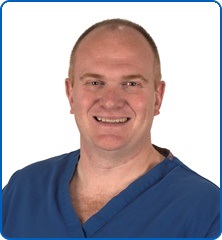 Bevis
Bevis
GMC Number: 6051905
Year of first qualification: 2002, University of Bristol
Specialty: Vascular Surgery
Clinical interests: Complex Aortic disease and vascular access for haemodialysis
Secretary: Debbie Grimwood
Telephone number: 0117 414 8800
Mr Paul Bevis trained in Vascular and Endovascular Surgery in the South West and in Birmingham.
He was appointed to the Bristol, Bath and Weston Vascular Network in 2015 and is the Clinical Lead for Complex Endovascular Surgery.
He has a special interest in aortic disease include thoracic, abdominal and thoraco-abdominal aortic aneurysms/dissections. He has extensive experience in EndoVascular Aneurysm Repair (EVAR) using Thoracic, Branched and Fenestrated devices as well as open aortic surgery.
He also has interests in the management of critical limb ischaemia and vascular access for haemodialysis.
He is a council member of the British Society of Endovascular Therapy and a member of the Vascular Society of Great Britain and Ireland.
Endourology Team
Regular
Off
Off
Urological Consultants
Mr Frank Keeley
Laparoscopic renal surgery, endourology and general urology
Mr Anthony Timoney
Endourology and general urology
Mr Joe Philip
Laparoscopic renal surgery, endourology and general urology
Urology registrars and fellows
The stone unit has a training registrar and 2 specialist stone fellows. We also train foundation year doctors, core surgical trainees and GP trainees.
Lithotripsy Nursing staff
Jacqueline Densley
Paula Davies
Lithotripsy Radiographers
Una Woollaston
Gillian Whittaker
Christine Taylor
Lithotripsy Co-ordinator
Julie Jackson
Endourology Additional Services
Regular
Off
Off
Investigation and treatment of upper tract transitional cell carcinoma
We investigate patients suspected of cancers in the ureter and renal pelvis with uretero-renoscopy and take biopsies where appropriate. Where clinically appropriate, we offer minimally invasive management of transitional cell carcinoma through uretero-renoscopy and laser ablation.
Insertion of stents to unblock kidneys obstructed by pelvic and abdominal malignancies, kidney stones or ureteric strictures
We offer stenting procedures for patients with blocked kidneys. Where kidneys are blocked and cannot be stented, or where stenting is not appropriate, our interventional radiology colleagues will attempt nephrostomy tube insertion to relieve kidney obstruction.
Rendezvous procedures
Alongside our interventional radiology colleagues we offer rendezvous procedures for the management of complex ureteric strictures. This is a minimally invasive management option, which is suitable for the treatment of some complex ureteric strictures.
Ureteroscopy and laser widening of pelvi-ureteric junction (PUJ) obstruction
We offer minimally invasive management of PUJ obstruction who are clinically suitable using ureteroscopy and laser widening of PUJ obstruction.