This page contains information about having a contrast-enhanced mammogram (CEM). The information will also be explained by your medical team so if you have any questions or concerns, please let us know.
What is CEM?
A mammogram is an X-ray of the breast. CEM is a technique where a contrast medium (dye) is injected into a vein in your arm before the mammogram is taken. The dye highlights any areas of your breast that we might need to investigate further.
Why do I need a CEM?
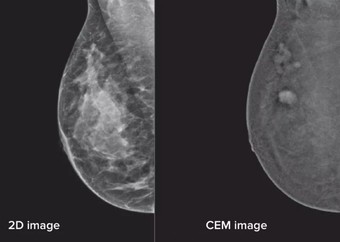
CEM is part of your breast assessment. It gives us more detailed information than just using standard mammography as seen below. The image shows the lesions in the breast brighter on the CEM image than a standard 2D mammogram.
What happens during a CEM?
- When you arrive at the clinic you will complete a short questionnaire. This is to check you can have the test. The mammographer will then call you into the X-ray room and explain the procedure to you.
- When you are ready, a small needle attached to a flexible plastic tube (cannula) will be placed into a vein in your arm. The cannula will be used to inject the contrast. This may cause a warm sensation for a short while.
- You will then be asked to undress from the waist up.
- Deodorant, antiperspirant, and talcum powder may affect the quality of the X-ray, so please do not use them on the day of your appointment. Or you can wash them off before the mammogram is taken.
- The mammographer will position your breasts, one at a time, in the mammogram machine. They will apply some compression and take the X-rays. The compression may be slightly uncomfortable but should not be painful, and is needed to get the best images.
- Mammograms will be taken of each breast from different angles.
- When the X-rays have been taken, can get dressed and return to the waiting room. You will be asked to stay in the department for around 30 minutes to make sure you are safe to go home. We will then remove the cannula from your arm.
How long will the test take?
The test itself should take no longer than 30 minutes. You will be in the department for about an hour.
Will I be able to resume my normal activities right away?
You can eat and drink normally and return to your usual activities straight away. You can continue with your normal medication as usual.
You are advised to drink plenty of fluids after a CEM test.
When can I expect my results?
The image will be reviewed by the radiology team, who may make further recommendations. You might need further tests, for example an ultrasound scan and/or a biopsy. Your consultant will tell you when you will receive the results of any tests you have, and if we need you to attend for any further investigations.
What are the risks of having a CEM?
- Radiation - All X-rays involve radiation. A mammogram uses very small doses of radiation but the benefit of detecting breast cancer at an early stage outweighs the risk of harm from the radiation exposure. The radiation dose from a CEM is slightly higher than a standard mammogram but is still well within the accepted safety guidelines.
- Allergic reaction - the contrast is safe and usually has no after-effects. A small number of people can have an allergic (anaphylactic) reaction or other side-effects. This can happen as soon as the contrast is injected or up to a day later.
- Reaction to the contrast dye may include, nausea (feeling sick), vomiting, headache, a rash, and itchy skin. You may also feel lightheaded or faint, breathing difficulties, wheezing, a fast heartbeat (tachycardia), clammy skin, swelling, abdominal pain.
- The mammographers are trained to recognise these reactions. We will check whether you have had any allergic reactions in the past before we give you the injection. If you are concerned you are having a reaction after leaving the department, please seek urgent medical advice or attend A&E.
- The dye we use for the test can affect the kidneys. This is uncommon, affecting less than 1 in every 100 people. To reduce the chances of this happening, we will not offer you the test if you have any of the risk factors listed below:
- You are pregnant.
- You are allergic to iodine.
- You have renal (kidney) failure.
- You have diabetes and/or take metformin.
After CEM
- Please drink plenty of fluids.
- Be aware of signs of allergic reactions detailed above. If you are worried you are having a reaction after leaving the department please seek urgent medical advice or go to the Emergency Department.
Who can I contact for further information?
If you have any further questions about anything covered on this page, please contact the breast admin team on:
- 0117 414 7000 (09:00 and 17:00, Monday to Friday)
They will be able to connect you with someone who can answer your question.
© North Bristol NHS Trust. This edition published January 2026. Review due January 2029. NBT003818