What is AAC?
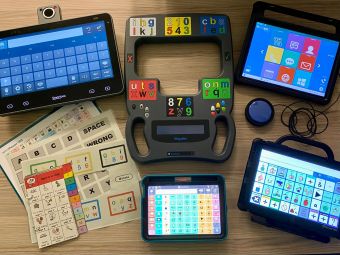
AAC stands for Augmentative and Alternative Communication. It includes all the different ways people can communicate when they can’t use their voice easily.
Some AAC is used by everyone. For example, waving goodbye, giving a thumbs up or pointing to a picture when you don’t speak the same language.
AAC helps people share what they think, how they feel, and what they need - even if they can't speak.
What are the different types of AAC?
- No-tech AAC does not require any tools. Examples are signing (Makaton or BSL), gestures, facial expressions, sounds or eye movements.
- Low-tech or paper-based AAC does not need power. Examples are pen and paper, communication board/book, alphabet boards, photos and E-Tran frames.
- Mid-tech AAC devices use batteries or simple technology. Examples are a GoTalk, a voice output switch like a Big Macks or a MegaBee.
- High-tech or powered AAC are powered devices. They speak out loud and show words or symbols. Some look like tablets or computers and can be controlled by touching the screen, using switches, or even with eye movement.
How can AAC WEST help me with AAC?
AAC WEST specialises in supporting people who have difficulties with their speech. We can help you find the best AAC set up for your needs. From high-tech devices to paper based AAC.
No one type of AAC is better than another. What matters most is what helps the person communicate clearly and easily. Some types of AAC give more independence, but our main goal is autonomy – making sure the person can say what they want, to who they want, when and where they want.
Many people use a mix of AAC tools. Different tools can work better in different situations. We assess each person and recommend the options that suit them best.
© North Bristol NHS Trust. This edition published December 2025. Review due December 20208. NBT003835